Design for Manufacturing (DFM)
Improve Manufacturability Before CNC Production Begins.
Engineering Review for More Practical, Production-Ready CNC Components.
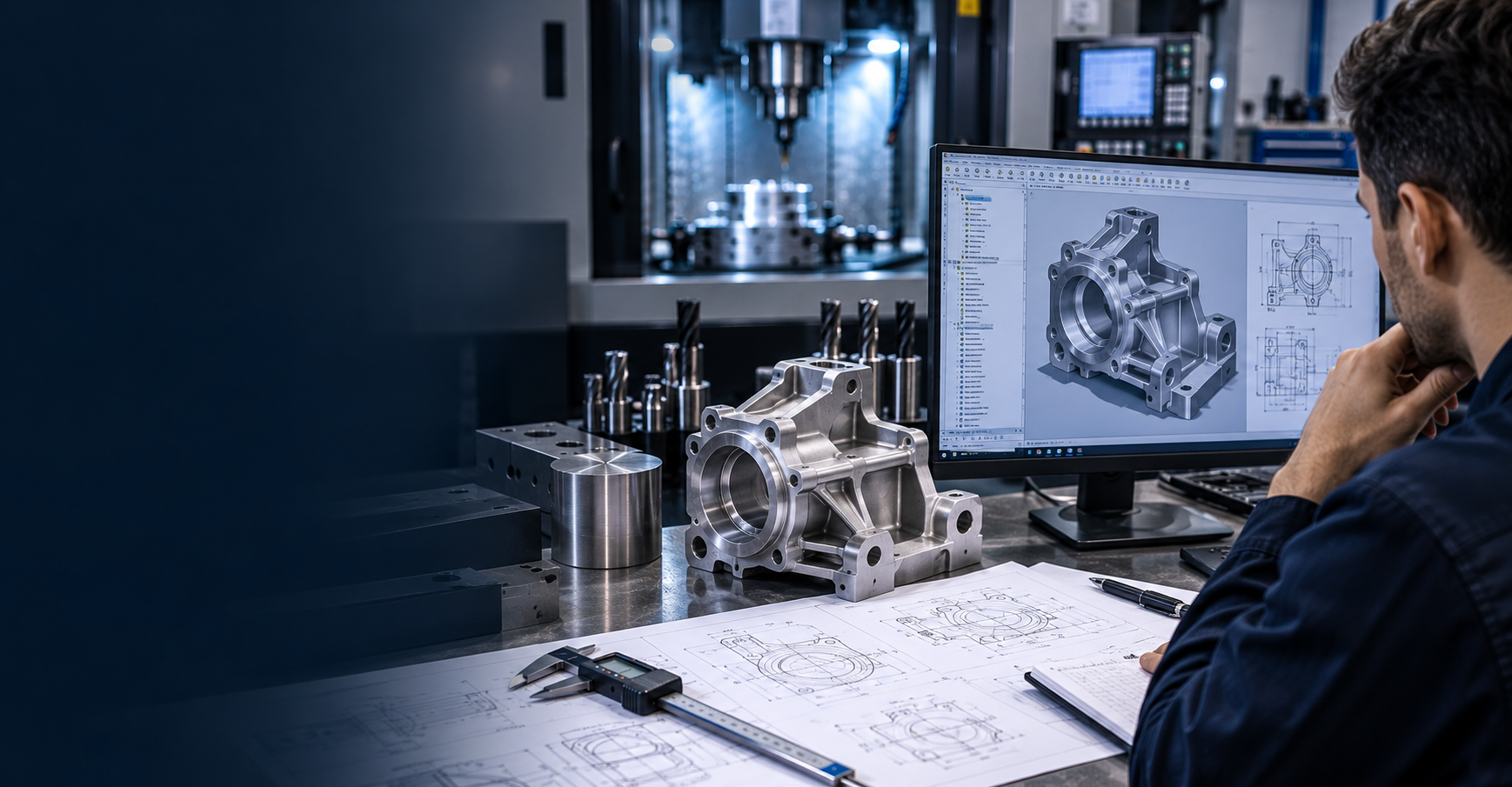
Gulf Precision Works supports Design for Manufacturing review for CNC-machined components by evaluating geometry, tool access, tolerances, material considerations and other manufacturability factors before machining begins, helping customers refine designs for prototype and production requirements across the UAE and wider Gulf region.
What DFM Means in CNC Manufacturing
Review the Design Before Committing It to the Machine.
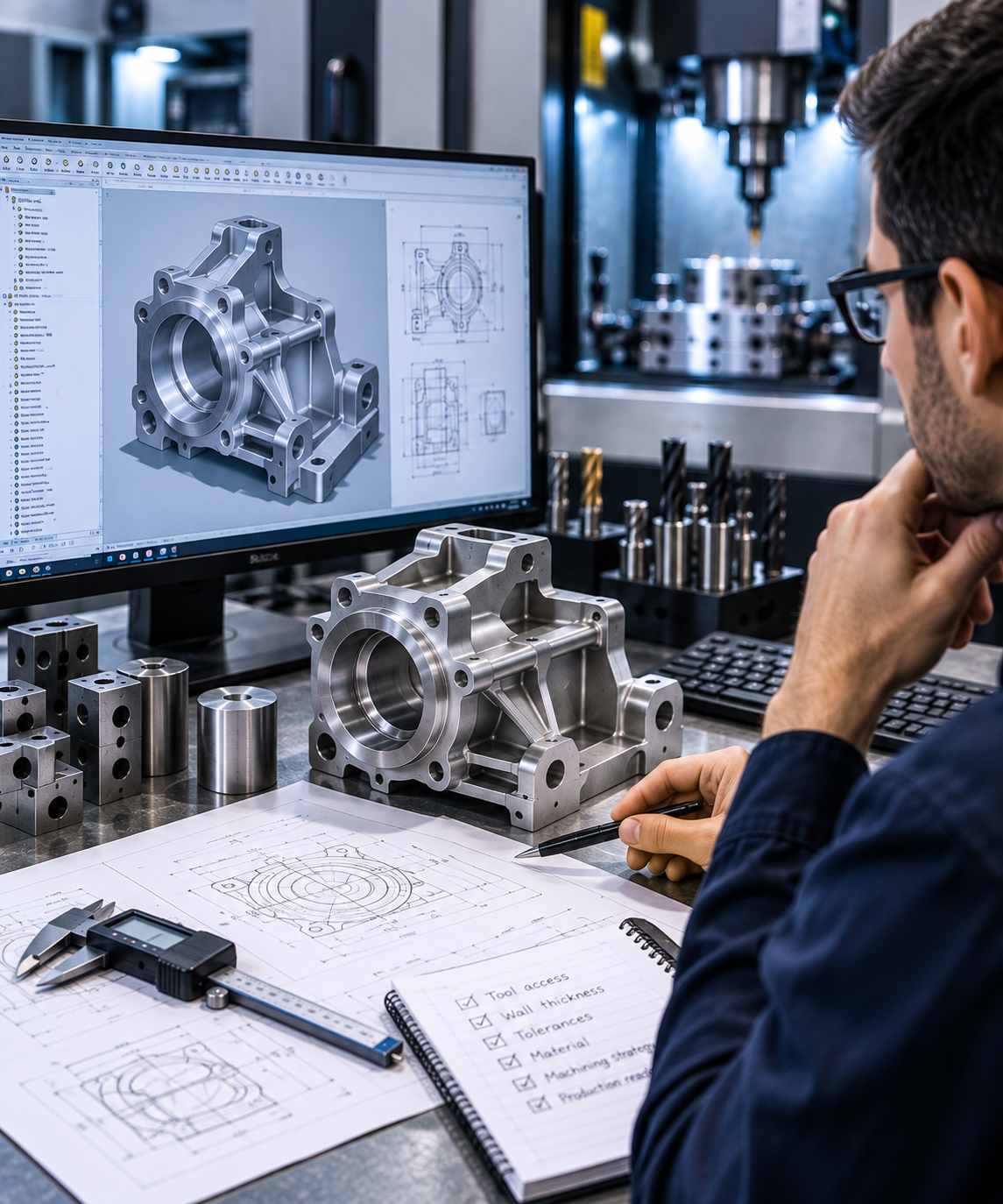
Design for Manufacturing focuses on whether a component can be produced practically using the intended machining process.
A DFM review can consider geometry, machining access, internal features, tolerances, material selection, setups, inspection needs and other manufacturing factors before production begins. The objective is not to change the engineering intent, but to identify areas that may benefit from clarification or refinement for CNC manufacture.
Start with the latest CAD model, drawing and functional requirement.
Evaluate geometry, access, tolerances, material and machining considerations.
Clarify or update features where the engineering team considers it appropriate.
Proceed with a clearer, more manufacturing-ready component definition.
Final design responsibility, material selection and functional approval remain with the customer's engineering authority. DFM feedback should be reviewed against the component's intended function and project requirements.
DFM Review Areas
Six Areas That Can Influence CNC Manufacturability.
A DFM review looks beyond the overall component shape. Individual features, machining access, dimensional requirements, workholding and process strategy can all influence how practically a component can be manufactured.
Geometry & Feature Design
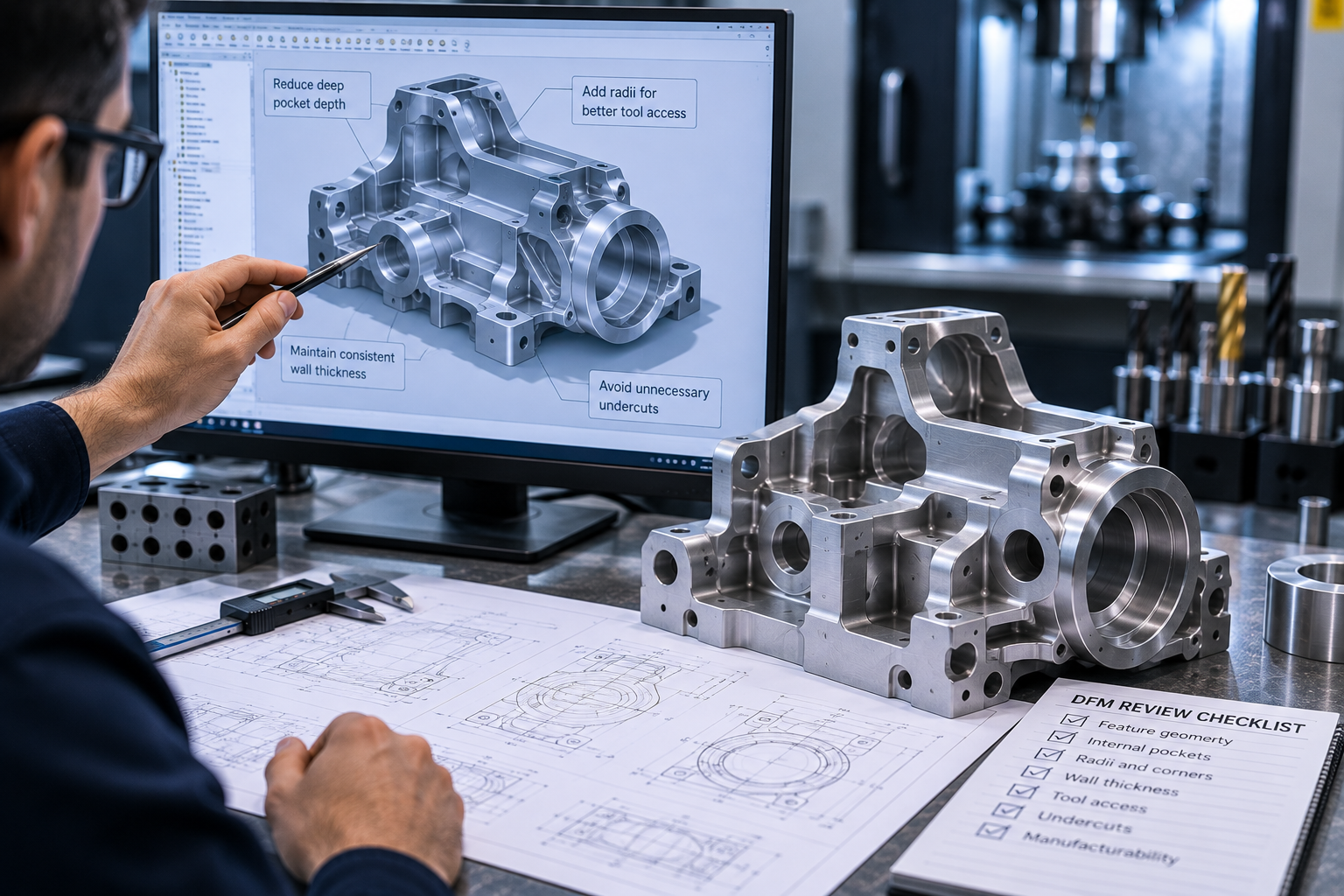
Review pockets, radii, bosses, undercuts, internal geometry and feature relationships that can influence machining strategy.
Tool Access & Reach
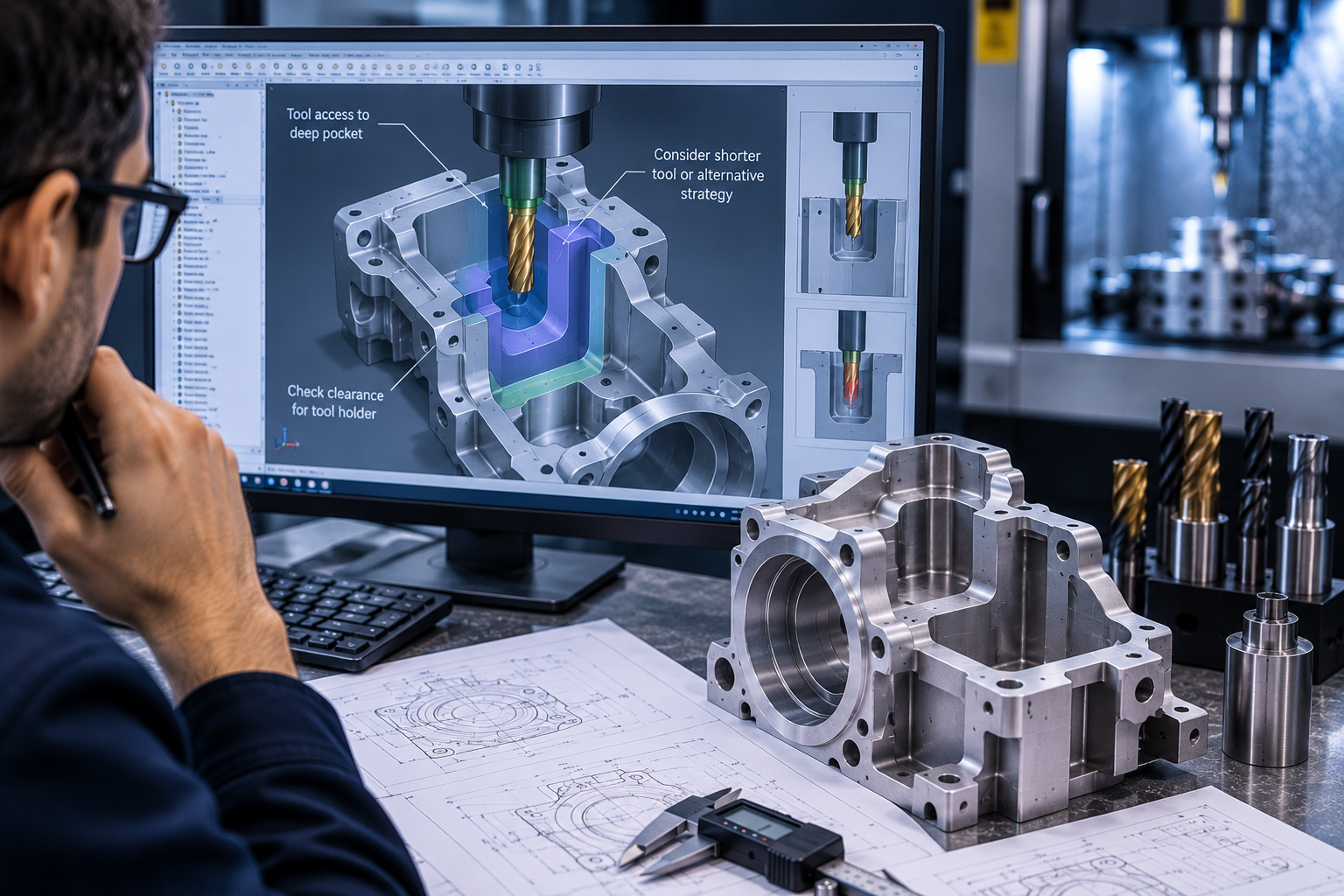
Evaluate whether cutting tools can reach required surfaces without excessive tool length or difficult machining conditions.
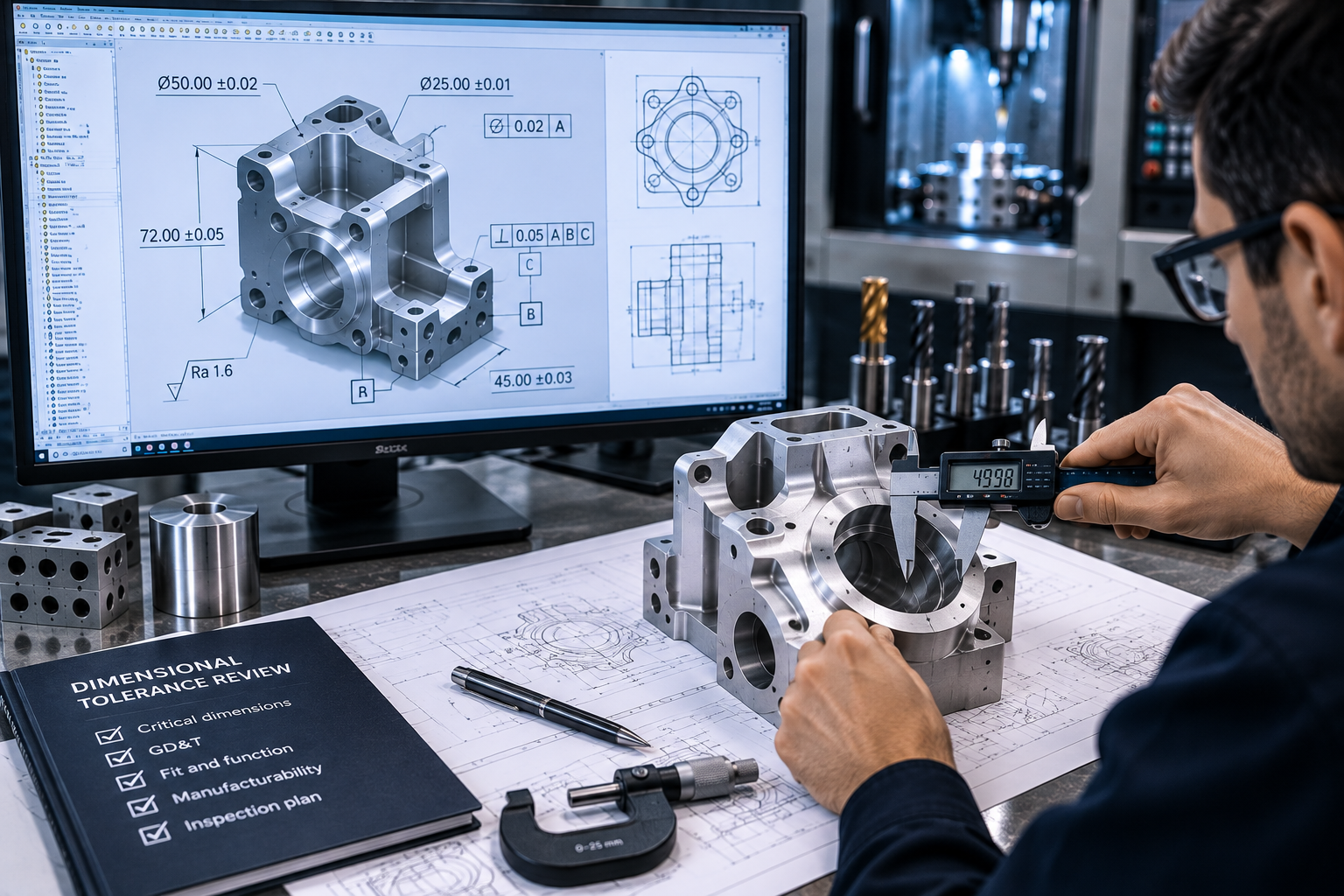
Tolerances & Critical Dimensions
Identify dimensions that directly affect fit, function or assembly instead of applying unnecessary tight tolerances everywhere.
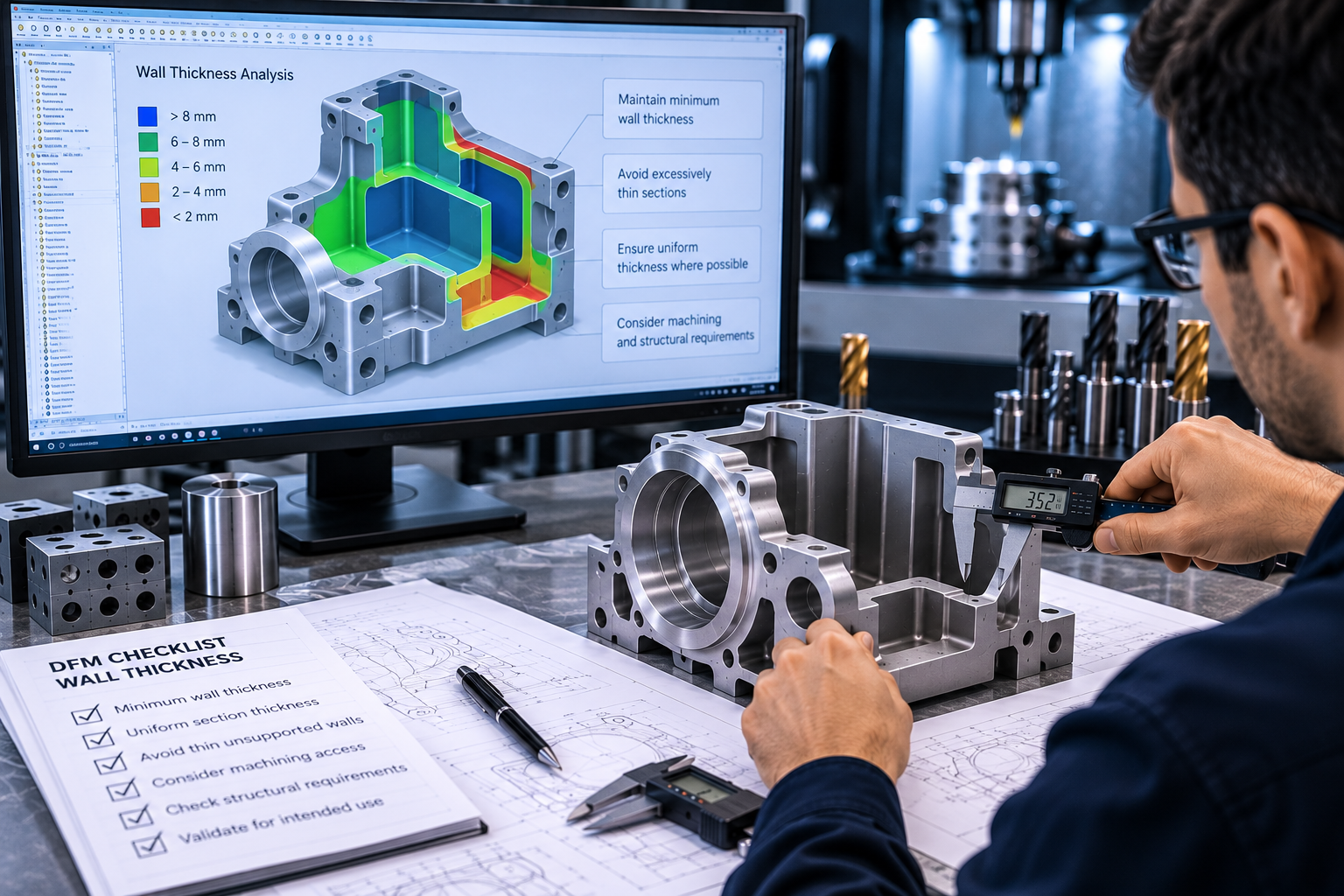
Wall Thickness & Structural Features
Thin walls, deep pockets and unsupported features may require additional consideration for rigidity, machining sequence and workholding.
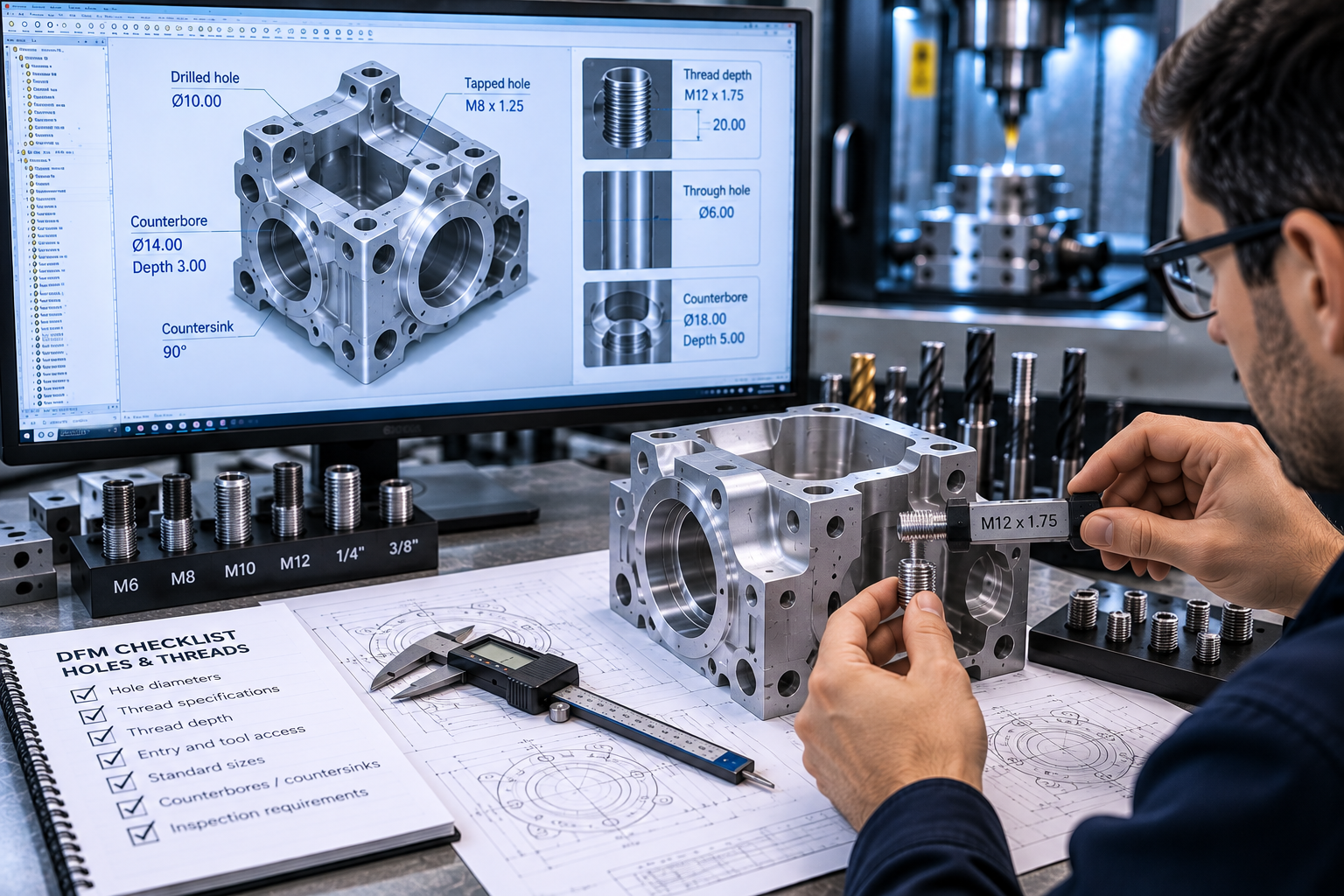
Holes, Threads & Internal Features
Review hole depth, diameter, thread requirements, entry conditions and accessibility for practical CNC manufacture and inspection.
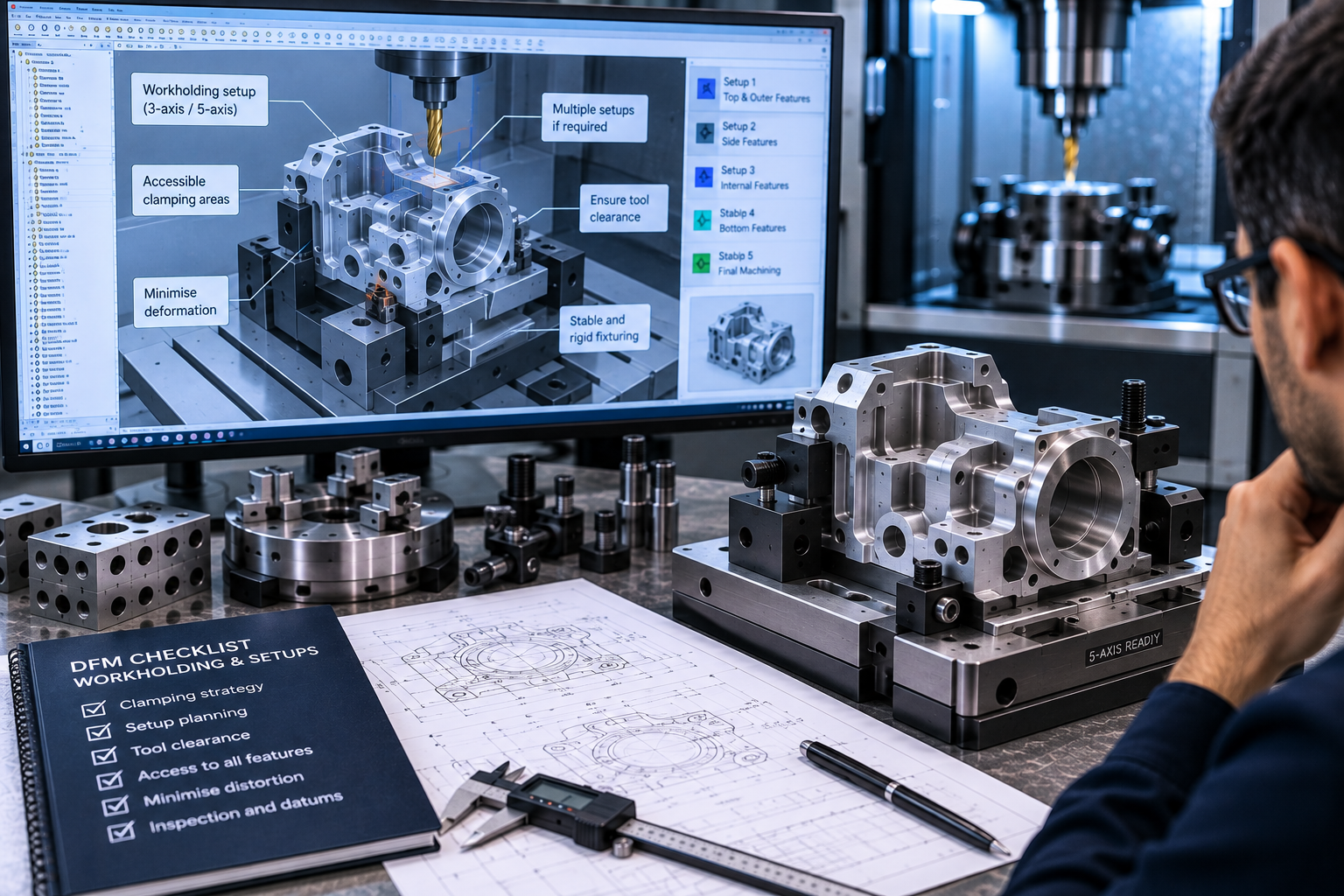
Workholding, Setups & Process Planning
Consider how the component can be located, supported and accessed across the required machining operations.
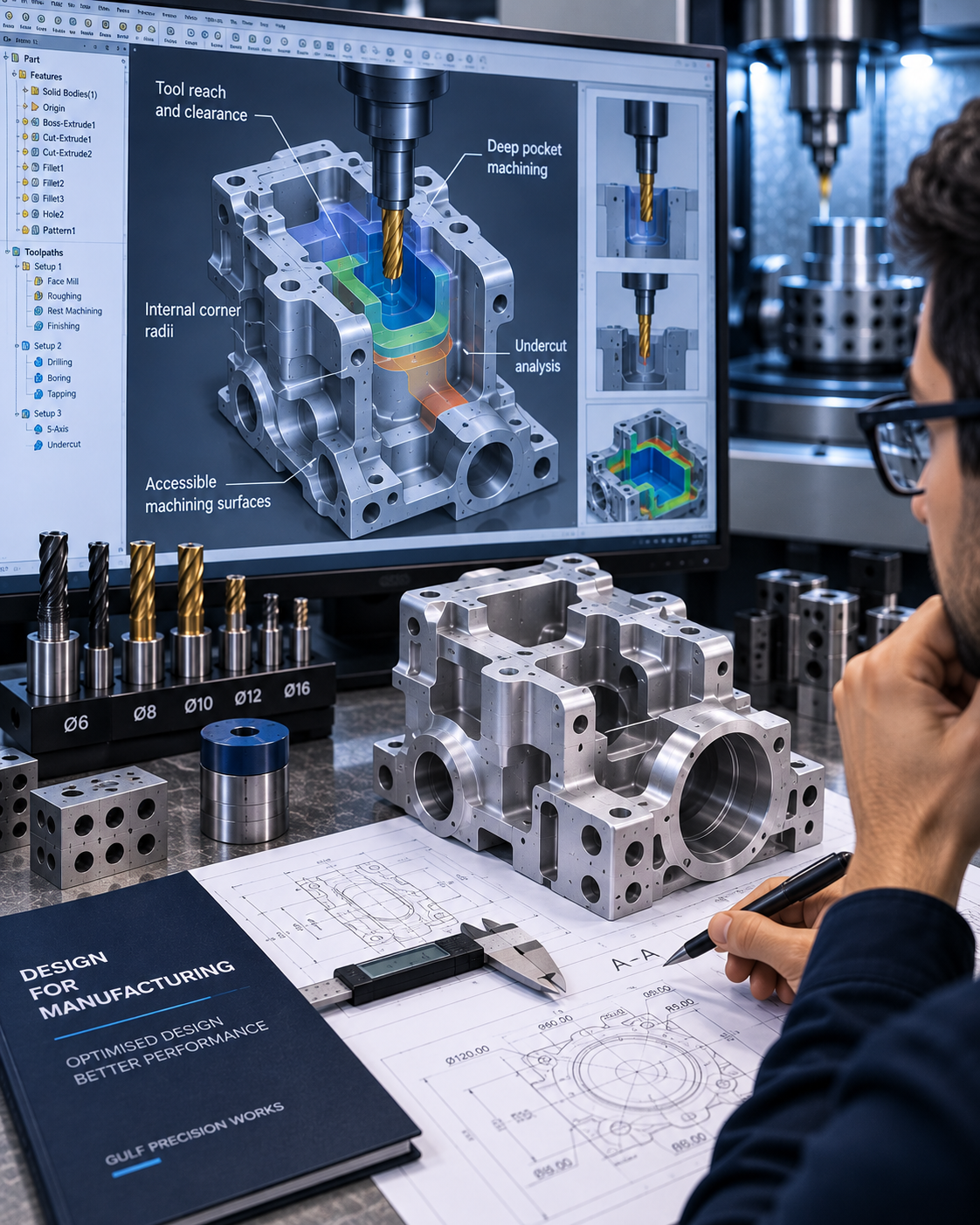
A feature that appears difficult to machine may still be essential to the component's function. Any proposed design change should therefore be reviewed and approved by the responsible engineering authority.
Geometry & Tool Access
Design Features Around How They Can Actually Be Machined.
A component may look straightforward in CAD but still present difficult machining conditions. Deep cavities, sharp internal corners, inaccessible surfaces, undercuts and long tool reach can influence tool selection, rigidity, setup strategy and manufacturing practicality.
Internal corners should account for the physical radius of the cutting tool where a sharp corner is not functionally required.
Deep cavities may require longer tools, which can influence rigidity, access and the overall machining approach.
Features that cannot be accessed directly may require specialised tooling, additional setups or alternative feature definition.
Orienting related features around practical machining directions can influence the number of required setups and access conditions.
Access should consider not only the cutter but also the tool holder and surrounding component geometry.
DFM does not mean simplifying every difficult feature. Where a feature is essential to fit, function or performance, the engineering requirement should remain the priority and the machining strategy should be reviewed around it.
Tolerance & Feature Review
Apply Tight Tolerances Where They Serve a Functional Purpose.
Tolerances influence machining strategy, inspection, process control and component cost. A DFM review helps distinguish genuinely critical features from dimensions that may not require the same level of control.
Start With Fit, Function and Assembly
The drawing should communicate which features matter most to component performance. DFM review can help identify where tolerance requirements need clarification before machining and inspection planning begin.
Review fit requirement, mating component, functional clearance and inspection method.
Review mounting pattern, datum reference, positional requirement and assembly function.
Confirm whether the geometric control affects sealing, assembly, alignment or functional contact.
Determine whether the feature needs a restrictive tolerance or simply requires adequate clearance.
Confirm thread specification, engagement, depth, access and functional requirement.
Identify dimensions that control mating, movement, sealing or component alignment.
Review geometric controls and datum structure where they are required by the design.
Consider whether the requirement influences machining sequence, setup or process control.
Align inspection requirements with critical dimensions and agreed project expectations.
DFM review may identify opportunities for clarification, but final tolerance changes should only be made by the responsible engineering authority after considering the component's intended function.
Material & Process Considerations
Material Choice and Process Strategy Should Be Reviewed Together.
A component's material, geometry and downstream requirements can influence the most practical machining route. DFM review can help identify where material behaviour, process selection, setup planning or finishing requirements should be considered before manufacturing begins.
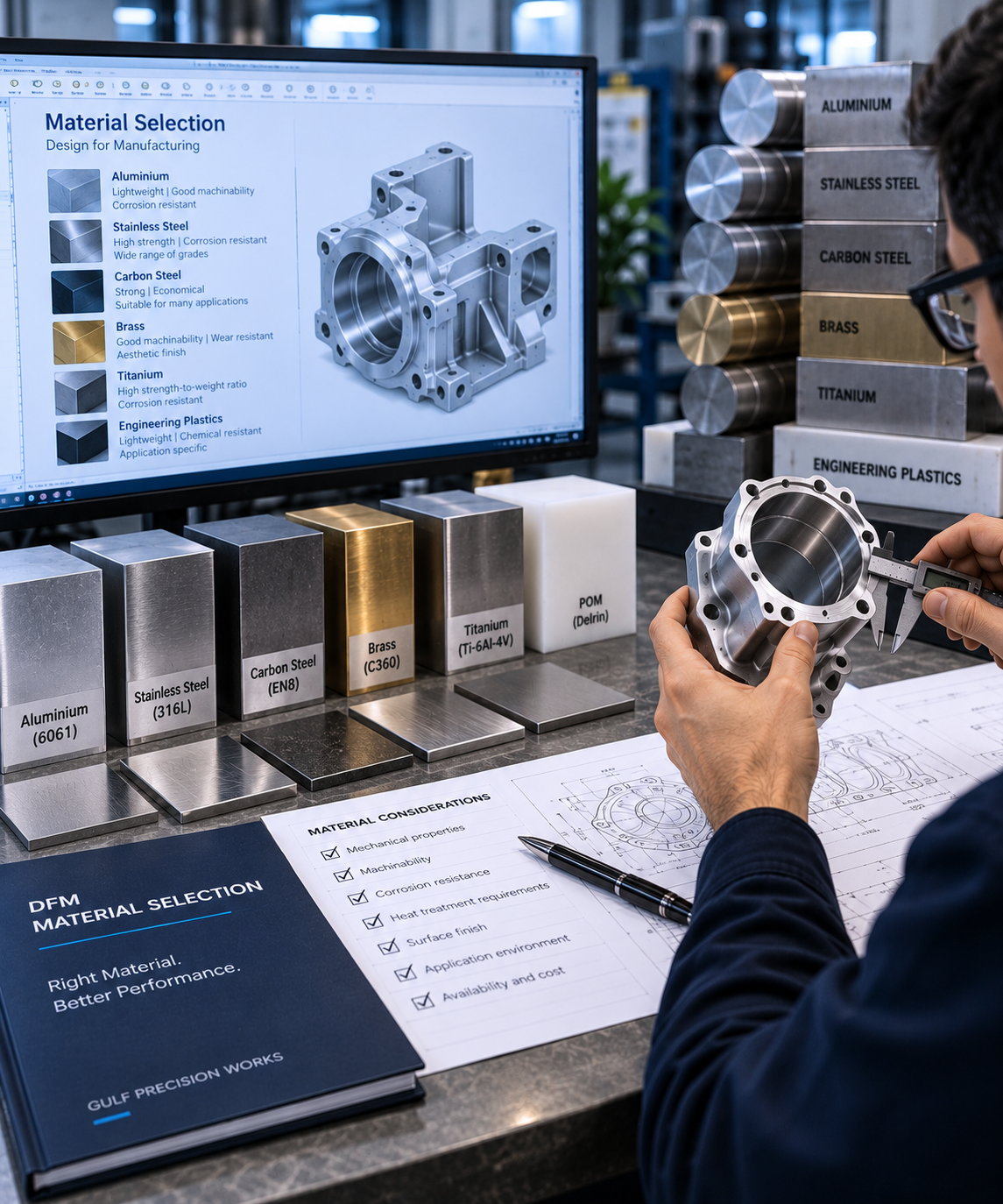
Material Selection & Machinability
Review required grade, condition, hardness, machinability and application-specific material requirements before defining the manufacturing route.
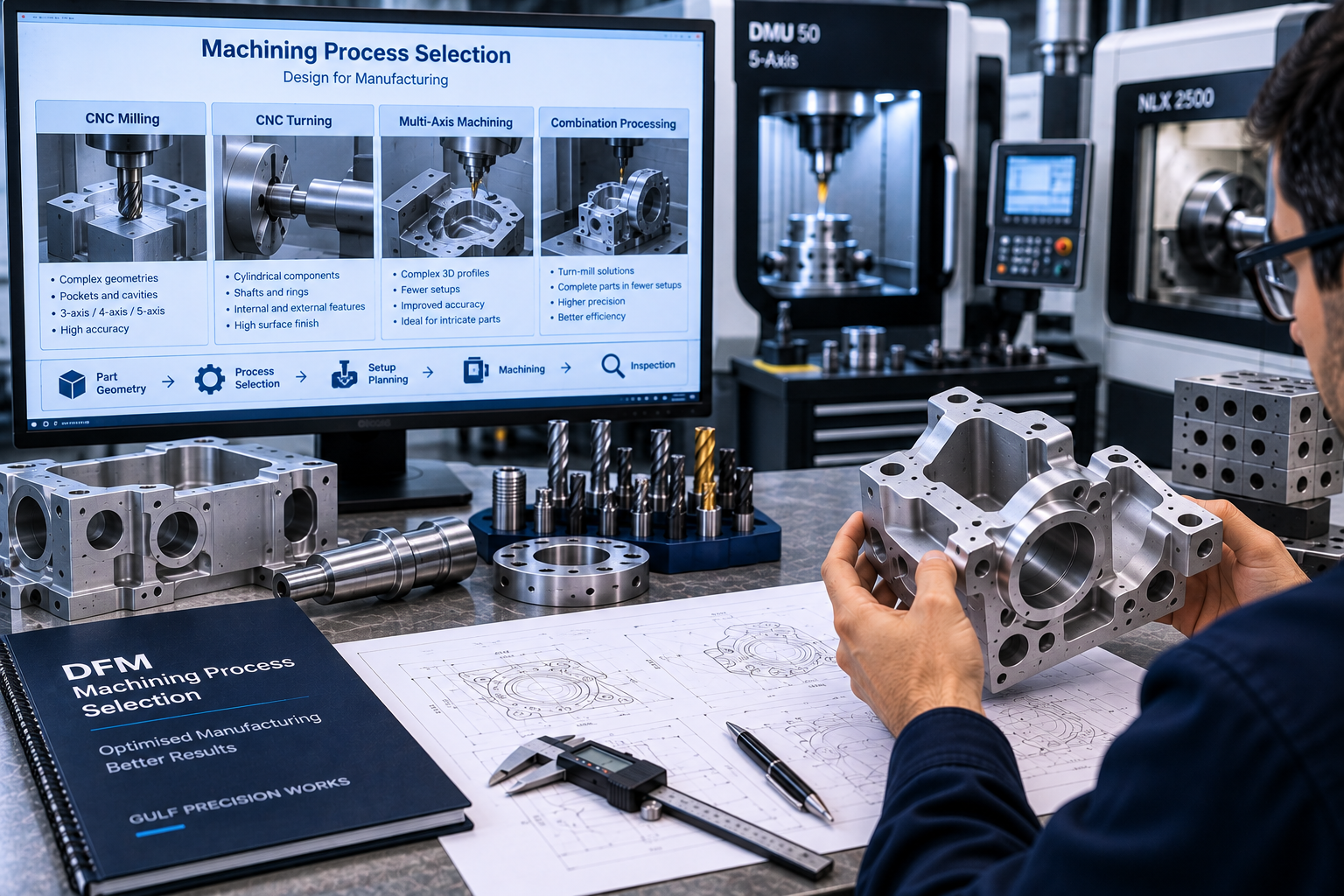
Milling, Turning & Setup Planning
Component geometry can influence whether milling, turning, multi-axis machining or a combination of operations is appropriate.
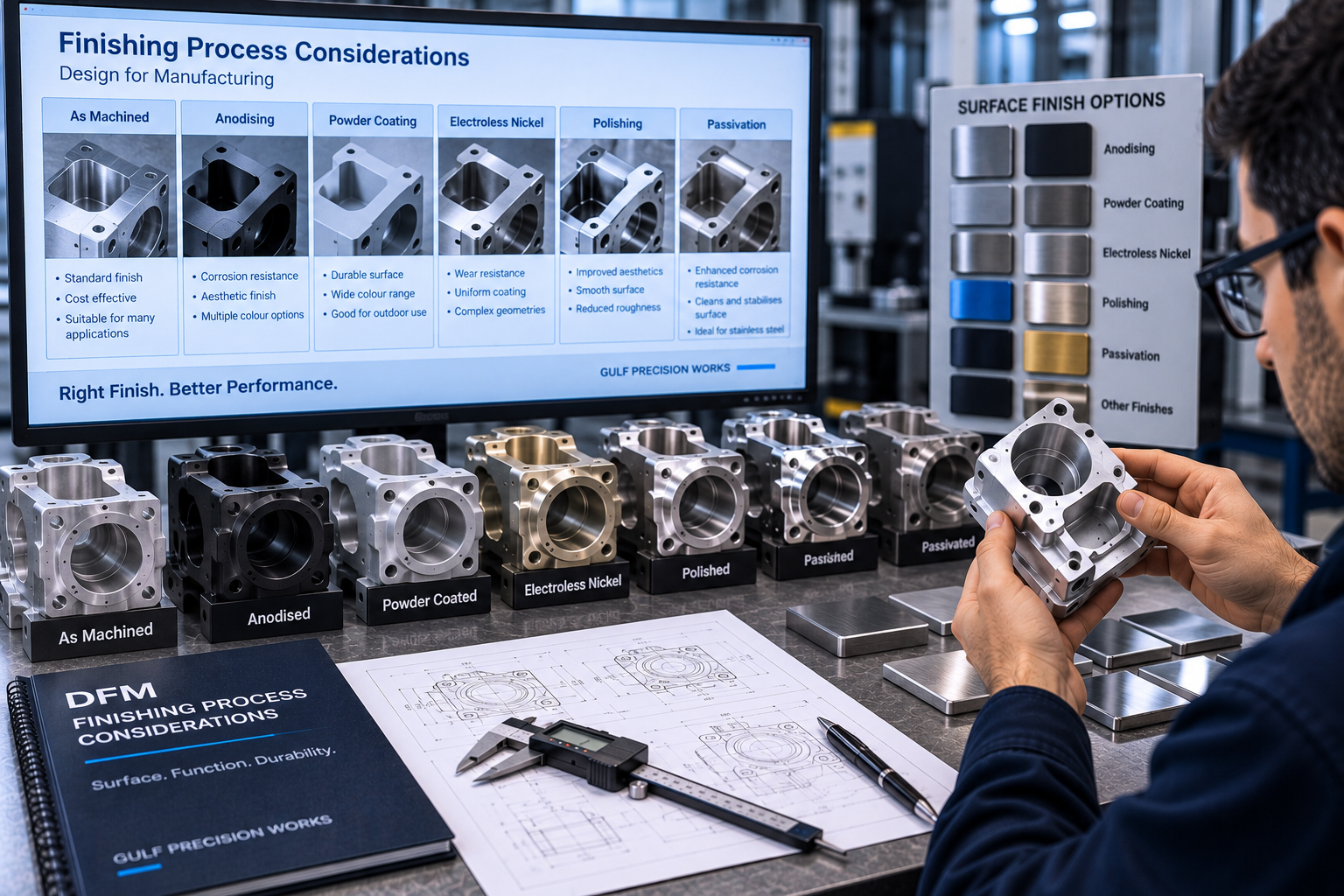
Finishing & Post-Machining Considerations
Surface finish, coating, treatment, assembly and inspection requirements may affect the manufacturing sequence and final component definition.
Define the actual engineering material requirement.
Match component form with practical machining processes.
Consider final surface requirements early in the review.
Define critical verification and documentation needs.
Where material certification, heat treatment, coating, surface finish or specific inspection documentation is required, include those requirements with the drawing so the complete manufacturing scope can be reviewed.
Prototype to Production Readiness
Use DFM Feedback to Build a Clearer Path Toward Production.
DFM is most useful when it is applied before the design becomes difficult to change. Prototype machining, dimensional verification and engineering feedback can help clarify the component definition before repeat production requirements are established.
Design Definition
Start with the latest CAD model, drawing, material specification and functional requirements.
DFM Assessment
Review geometry, tool access, tolerances, materials, workholding and machining considerations.
Initial Machining
Manufacture an initial component or batch using the agreed design and machining approach.
Inspection & Functional Review
Review agreed dimensions, critical features and functional findings from the prototype stage.
Revision Confirmation
Incorporate approved engineering changes and confirm the drawing revision intended for production.
Manufacturing Readiness
Move forward with a clearer component definition, inspection requirement and repeat manufacturing scope.
Proposed design changes remain subject to approval by the responsible engineering authority.
Confirm the agreed dimensional and functional requirements before committing to repeat manufacture.
Production should reference the approved drawing revision and agreed manufacturing requirements.
Early review provides more opportunity to clarify manufacturing considerations before tooling, machining, inspection and repeat production requirements are established.
Typical DFM Improvements
Small Design Changes Can Create More Practical Manufacturing Conditions.
DFM review does not mean redesigning a component simply to make machining easier. It identifies features that may deserve engineering discussion where a practical adjustment could support machining access, inspection, process stability or clearer manufacturing definition without compromising functional intent.
Deep cavities may require extended tooling and can create difficult access conditions depending on component geometry.
Where engineering intent allows, pocket depth or access geometry may be reviewed to support a more practical cutting-tool arrangement.
Standard rotating cutting tools naturally create a radius at internal corners.
Where a sharp corner is not functionally necessary, an appropriate radius can be considered during engineering review.
Applying the same restrictive tolerance to non-critical features can introduce unnecessary manufacturing and inspection requirements.
Critical dimensions can remain tightly controlled, while other requirements can be clarified according to functional need.
Restricted tool approach may require specialised tooling, additional setups or a different machining strategy.
Where permitted by the design, feature position or surrounding geometry may be reviewed to improve direct machining access.
Thin sections may require special consideration for workholding, machining sequence and dimensional stability.
Wall thickness and support geometry can be reviewed against functional requirements and the intended manufacturing process.
An unclear callout can leave thread size, depth, engagement or inspection expectations open to interpretation.
Confirm specification, depth, access and any inspection requirement before machining begins.
Review difficult features before machining strategy is fixed.
Reduce ambiguity around critical manufacturing requirements.
Align geometry, setups and process requirements earlier.
Move forward using an approved manufacturing definition.
Every component has different functional requirements. Any proposed geometry, tolerance or feature change should be reviewed and approved by the responsible engineering authority before the manufacturing definition is updated.
Design for Manufacturing FAQs
Common Questions About DFM for CNC Machining.
DFM review helps clarify manufacturing considerations before machining begins. These questions explain how the process fits into prototype, engineering and production projects at Gulf Precision Works.
What is Design for Manufacturing in CNC machining?
Design for Manufacturing, or DFM, is the review of a component's geometry, tolerances, material, machining access, workholding and other manufacturing considerations before production begins. The objective is to identify issues that may benefit from clarification or engineering review before machining.
When should a DFM review be carried out?
DFM is most useful before the design is fully frozen, especially before prototype machining, production transfer or repeat manufacturing. Early review provides more opportunity to clarify geometry and manufacturing requirements before the process is established.
What information should I provide for a DFM review?
Provide the latest CAD model and technical drawing, together with the required material, quantity, critical dimensions, surface requirements and any relevant inspection or documentation requirements. Functional context can also help clarify which features are important to the design.
Will GPW change my component design?
DFM feedback may identify features that deserve engineering discussion, but GPW should not be considered the final design authority unless that responsibility has been explicitly defined. Any design change should be reviewed and approved by the responsible engineering authority before the drawing or CAD revision is updated.
Can DFM help with tight tolerance components?
Yes. DFM review can help identify which dimensions and geometric controls are functionally critical, how those requirements relate to machining strategy, and what inspection approach may be appropriate. Final tolerance requirements remain governed by the approved engineering drawing.
Does DFM include material selection?
Material can form part of the manufacturability review. Factors such as grade, condition, machinability, hardness, corrosion resistance and downstream finishing may influence manufacturing planning. Final material selection should follow the project's engineering and functional requirements.
Can DFM support prototype-to-production projects?
Yes. DFM review can be used before prototype machining, followed by prototype verification and approved engineering revision before repeat production. This can help create a clearer manufacturing definition for later production requirements.
Does a DFM review guarantee lower manufacturing cost?
No. DFM can identify manufacturing considerations that may affect tooling, setups, machining time, inspection or process complexity, but project cost depends on the final geometry, material, quantity, tolerances and complete manufacturing scope.
Send the latest CAD model, drawing, material requirement and expected quantity so the manufacturing scope can be reviewed before machining begins.
Start Your DFM Review
Review Manufacturability Before CNC Machining Begins.
Share the latest design definition before committing the component to prototype or production machining.
Send your CAD model, technical drawing, material specification, expected quantity, critical features and relevant quality requirements to Gulf Precision Works. We can review the manufacturing scope and identify practical DFM considerations for CNC machining projects across the UAE and wider Gulf region.