Precision CNC Manufacturing
CNC Turning Services for Precision Rotational Components.
Precision CNC turning for shafts, bushings, sleeves, threaded components and other rotational parts. Gulf Precision Works supports prototype, low-volume and repeat-production requirements for customers across the UAE and wider Gulf region.
Precision CNC Turning
Controlled Machining for Rotational Components.
CNC turning is suited to components built around cylindrical geometry, where diameters, bores, shoulders, grooves, tapers and threads must be produced in controlled relationships.
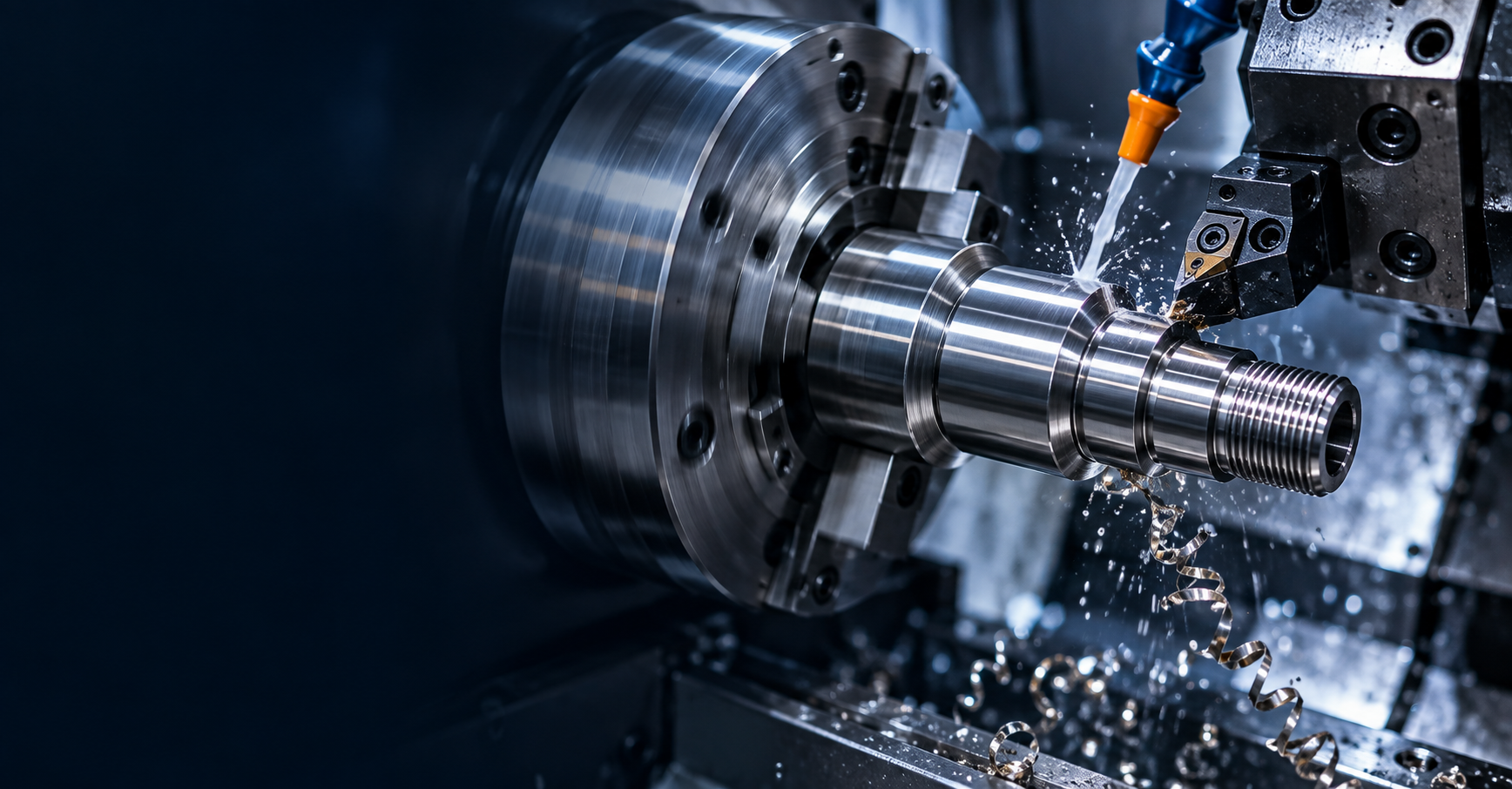
During CNC turning, the workpiece rotates while controlled cutting tools remove material to produce the required external and internal geometry.
This makes turning particularly effective for shafts, pins, bushings, sleeves, fittings, connectors and threaded components.
Gulf Precision Works coordinates CNC turning requirements from drawing review and material specification through machining, inspection and supply for UAE and Gulf customers.
External Turning
Machining of outside diameters, shoulders, steps and cylindrical profiles to drawing requirements.
Boring & Internal Features
Internal diameters, bores and related features can be machined according to component geometry and specification.
Threading & Grooving
External and internal threads, grooves and relief features for drawing-specific rotational components.
Tapers & Profiles
Tapered diameters, transitions and rotational profiles can be produced for suitable component designs.
Components Built Around a Rotational Axis
CNC Turning Capabilities
Precision Turning Operations for Rotational Components.
CNC turning can combine multiple rotational machining operations within a controlled manufacturing sequence, allowing shafts, sleeves, fittings, bushings and other cylindrical components to be produced to drawing-based dimensional requirements.
OD Turning
Outside diameters, steps, shoulders and cylindrical profiles machined according to drawing dimensions and component requirements.
ID Boring
Internal bores and diameter features can be machined for bushings, sleeves, fittings and other rotational parts.
Facing
End faces can be machined to establish component length, reference surfaces and perpendicular relationships to the rotational axis.
Threading
External and internal thread features can be produced according to specified sizes, forms and component requirements.
Grooving
External and internal grooves, reliefs and retention features can be incorporated where specified on the component drawing.
Parting
Turned components can be separated from bar stock using planned parting operations as part of the machining sequence.
Taper Turning
Conical and tapered diameters can be machined for fittings, shafts and components requiring controlled angular transitions.
Precision Feature Machining
Diameters, shoulders, grooves, threads and related features can be planned around critical functional relationships.
Turning Capability Starts With the Component
Share the drawing, material, quantity and critical dimensions so GPW can review the appropriate CNC turning approach for quotation.
Typical CNC-Turned Components
Precision Rotational Parts for Engineering Applications.
CNC turning is suited to a wide range of cylindrical and rotational components where diameters, bores, threads, grooves, shoulders and concentric relationships are important.
Shafts & Pins
Stepped shafts, locating pins and related cylindrical parts with controlled diameters, shoulders and end features.
Bushings & Sleeves
Cylindrical bushings and sleeves with controlled internal and external diameters for fit, support and spacing applications.
Flanges
Turned flange-type components with machined faces, diameters, bores and connection features according to drawing requirements.
Threaded Components
Components incorporating specified external or internal threads for fastening, adjustment and connection requirements.
Precision Fittings
Turned fittings and connector-type components with threads, tapers, bores and precision external profiles.
Spacers & Collars
Precision spacers, collars and distance pieces used to control position, spacing or alignment within mechanical assemblies.
Rollers & Journals
Cylindrical rollers, journals and related rotational elements with drawing-controlled diameters and surface requirements.
Custom Rotational Components
Customer-designed cylindrical parts can be reviewed against material, geometry, tolerances and production requirements.
CNC Turning Is Well Suited to Components With
Send the drawing, material, quantity and technical requirements so GPW can review your component for CNC turning.
Materials We Machine
CNC Turning Across Engineering Materials.
Material grade influences cutting behaviour, tool selection, achievable surface condition, thread quality and dimensional control. GPW reviews the specified material together with the component geometry and application before production.
Aluminium
Suitable for lightweight shafts, spacers, fittings, prototypes and precision components where low mass and good machinability are important.
Stainless Steel
Precision turned stainless-steel components can support applications requiring corrosion resistance, mechanical strength and durability.
Carbon & Alloy Steel
Steel grades can support shafts, pins, threaded parts, rollers and other components requiring strength and mechanical performance.
Brass & Copper Alloys
Suitable grades can be reviewed for precision fittings, connectors, bushings and other electrical, fluid-control or mechanical components.
Engineering Plastics
Selected engineering plastics can be turned for bushings, spacers, sleeves, insulating components and project-specific applications.
Project-Specific Materials
Additional material grades can be reviewed against rotational geometry, feature requirements, quantity and technical specification.
Specify the Exact Grade at RFQ Stage
Include the exact material grade, drawing, quantity and certification requirements with your RFQ so the complete turning requirement can be reviewed.
Accuracy, Tolerances & Surface Finish
Precision Turning Requires Control Around the Rotational Axis.
CNC turning accuracy depends on the relationship between diameters, bores, shoulders, threads, surfaces and the component axis. These requirements should be reviewed together with the material, geometry and inspection method.
Control the Features That Matter Most
Rotational components often depend on relationships between external and internal features rather than a single dimension in isolation.
Critical outside and inside diameters should be identified according to fit and functional requirements.
Rotational relationships can be important where multiple diameters, bores or journals share a common axis.
Thread form, size, class and mating requirements should be clearly defined on the drawing.
Surface requirements should be specified where sealing, bearing, sliding, fit or appearance makes them important.
Inspection Around Functional Geometry
Appropriate measurement methods can support verification of turned component dimensions, rotational relationships and agreed quality requirements.
Verification of specified external and internal diameters against drawing requirements.
Critical relationships between bores, journals and turned diameters can be reviewed.
Specified threaded features can be checked according to agreed component requirements.
Project-specific surface finish requirements can be considered where they are functionally important.
Agreed component dimensions can be verified before release and supply.
Project-specific inspection documentation can be coordinated where required and agreed.
Unnecessarily tight dimensional, runout or surface requirements can increase machining and inspection complexity. Identify the truly critical features and functional interfaces on the drawing.
Include critical dimensions, thread details, surface requirements, datums and inspection needs with your RFQ so they can be reviewed before quotation.
Prototype to Production
CNC Turning Support Across the Production Lifecycle.
CNC turning requirements can progress from a first prototype into recurring production. Gulf Precision Works supports projects through this lifecycle, coordinating machining, inspection and supply requirements as quantities and production needs develop.
Prototype Turning
Initial shafts, bushings, fittings or other rotational parts can be produced for fit, function and design evaluation.
Development Batch
Small batches can support engineering refinement, tolerance review and process validation before recurring production.
Low-Volume Production
Agreed turning operations, inspection requirements and component specifications can be incorporated into small production runs.
Repeat Production
Repeat orders can follow established drawings, material specifications and agreed quality requirements.
Production Supply
Ongoing requirements for turned precision components can be coordinated for UAE and wider Gulf customers under agreed project scope.
Share the drawing, material, expected quantities and critical rotational requirements early so the complete CNC turning scope can be reviewed together.
Industries We Support
CNC-Turned Components for Demanding Engineering Applications.
Precision turned components are used across industries where controlled diameters, threads, bores, concentric geometry and repeatable component quality are important to the final application.
Aerospace & Aviation
Drawing-controlled shafts, pins, spacers, bushings and related rotational components for aviation-related engineering requirements.
Explore Aerospace & Aviation →Automotive
Shafts, bushes, spacers, pins, threaded parts and custom turned components supporting automotive development and production requirements.
Explore Automotive →Oil & Gas
Precision fittings, sleeves, bushings, threaded parts and other rotational components for project-specific industrial requirements.
Explore Oil & Gas →Medical & Precision Equipment
Precision pins, spacers, sleeves, fittings and equipment components for project-specific technical and precision applications.
Explore Medical & Precision →Industrial Engineering
Shafts, rollers, bushings, journals, pins, spacers and threaded components for machinery and industrial equipment.
Explore Industrial Engineering →Defence & Special Projects
Drawing-driven CNC turning support for eligible industrial and special-project components, subject to applicable requirements.
Explore Special Projects →Turning Requirements Change With the Application
Send your drawing, material specification, quantity and quality requirements for technical review and quotation.
CNC Turning FAQs
Frequently Asked Questions About CNC Turning Services.
Common questions from engineers and procurement teams sourcing shafts, bushings, sleeves, fittings, threaded parts and other precision CNC-turned components for UAE and Gulf projects.
What CNC turning services does Gulf Precision Works support?
Gulf Precision Works supports CNC turning requirements including outside-diameter turning, boring, facing, threading, grooving, parting, taper turning and precision feature machining for suitable rotational components.
What types of components can be CNC turned?
Typical CNC-turned components include shafts, pins, bushings, sleeves, flanges, spacers, collars, rollers, threaded parts, fittings and custom components designed primarily around a rotational axis.
What materials can be used for CNC turning?
Turning requirements can be reviewed for aluminium, stainless steel, carbon and alloy steels, brass and copper alloys, selected engineering plastics and other project-specific materials. The exact material grade should be identified during the RFQ stage.
Can you produce internal and external threads?
Internal and external threaded features can be supported where appropriate. Thread size, form, pitch, class and any mating requirements should be clearly defined on the component drawing.
What tolerances can be achieved with CNC turning?
Achievable tolerance depends on factors including material, component size, geometry, feature type, workholding, length-to-diameter relationship, machining strategy and inspection method. Critical diameters, runout requirements and other tolerances should therefore be identified on the drawing for review.
Can CNC turning support prototype and repeat production?
Yes. CNC turning can support prototype components, development batches, low-volume requirements and recurring production orders, subject to the component design, material, quantity and project scope.
Can inspection and quality documentation be provided?
Dimensional and project-specific inspection requirements can be coordinated where agreed. If dimensional reports, material certificates, inspection documentation or other quality records are required, these should be stated with the RFQ.
What information should I send for a CNC turning quotation?
Ideally provide a technical drawing and, where available, a 3D model together with material grade, quantity, thread details, critical diameters, tolerances, surface-finish requirements, required treatments and inspection or documentation needs.
Send your drawing, material, quantity and technical requirements to Gulf Precision Works for project review.
Start Your CNC Turning Project
Have a Precision Rotational Component? Send Us the Drawing.
Share your technical drawing, material grade, quantity, thread details, critical diameters, surface-finish requirements and inspection needs with Gulf Precision Works. We can review the component and coordinate the appropriate CNC turning solution for customers across the UAE and wider Gulf region.