Precision CNC Manufacturing
CNC Milling Services for Precision Components.
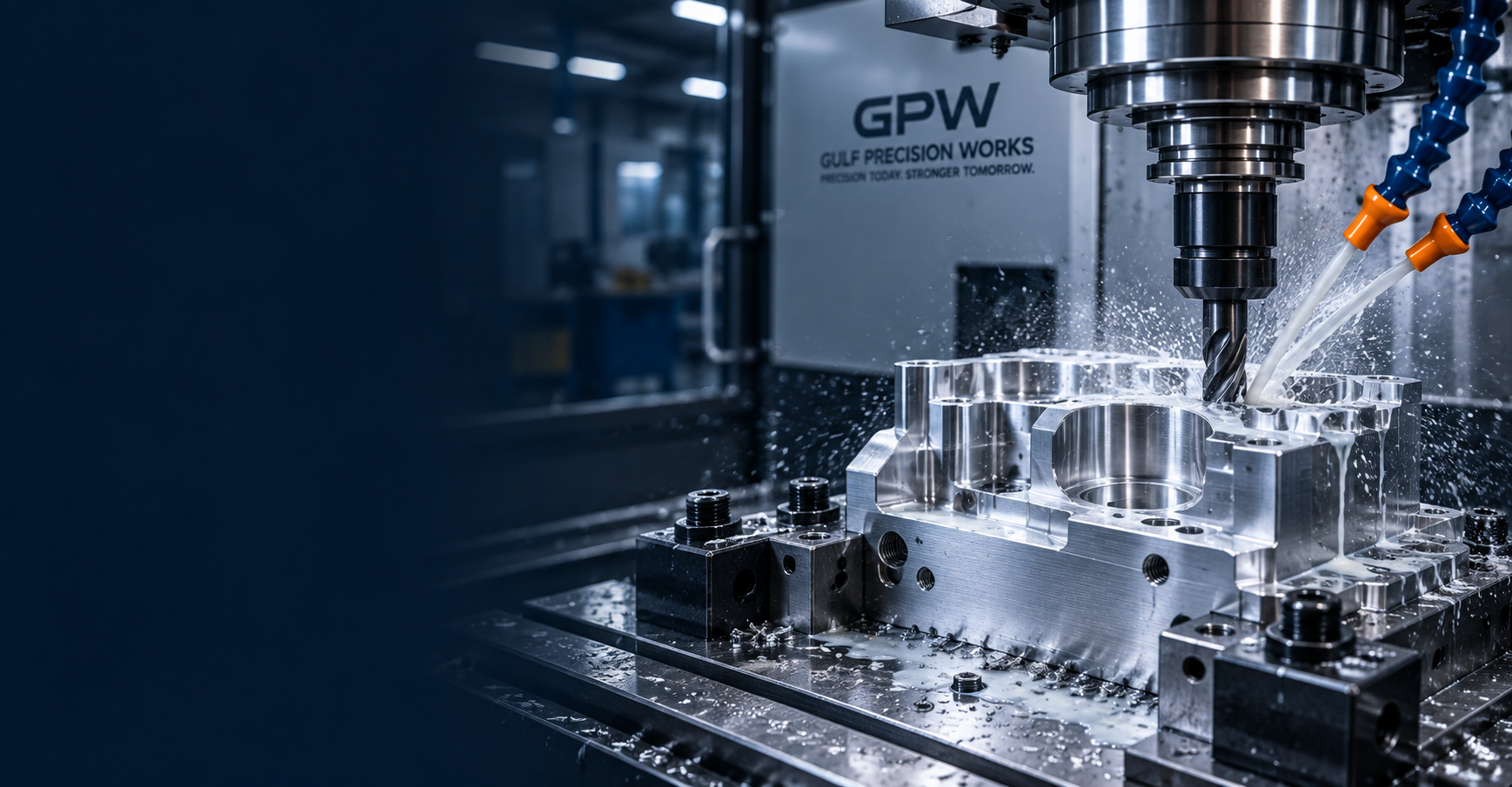
Precision CNC milling for complex components, prototypes and production parts. Gulf Precision Works supports UAE and Gulf engineering customers with drawing-driven machining, material flexibility and coordinated quality requirements.
Precision CNC Milling
Precision Milling for Complex Engineering Components.
CNC milling provides a controlled and repeatable method for producing precision components with machined faces, pockets, slots, holes and complex geometric features.
Gulf Precision Works supports CNC milling requirements for prototypes, low-volume batches and repeat production. Components are reviewed against the drawing, material, geometry, tolerance and inspection requirements so the machining approach can be aligned with the application.
Geometry, dimensions and manufacturing requirements.
Machining approach considered against material requirements.
Controlled CNC milling according to the agreed scope.
Inspection requirements considered before component supply.
CNC Milling Capabilities
Flexible Milling Capability for Precision Engineering Components.
CNC milling can support a wide range of engineered components, from straightforward machined plates and brackets to multi-feature parts requiring controlled geometry, accurate positioning and repeatable production.
3-Axis CNC Milling
Precision milling along the X, Y and Z axes for faces, pockets, holes, slots and other prismatic component features.
Multi-Side Machining
Components requiring features on several faces can be manufactured through planned setups and controlled repositioning.
Pocketing & Profiling
Internal pockets, external contours, shoulders, steps and profiles can be machined according to component geometry.
Drilling & Tapping
Drilled, bored, countersunk and threaded features can be incorporated according to drawing and assembly requirements.
Precision Feature Machining
Critical faces, bores, hole patterns and dimensional relationships can be reviewed around the component's functional requirements.
Complex Component Machining
Multi-feature engineering parts can be reviewed to determine the appropriate CNC milling strategy and manufacturing sequence.
Geometry Determines the Milling Strategy
Share your technical drawing, material, quantity and critical requirements so GPW can review the appropriate milling approach for quotation.
Typical CNC-Milled Components
Precision-Machined Parts for Real Engineering Applications.
CNC milling is used across a broad range of component types, from straightforward plates and brackets to housings, fixtures and complex engineered parts containing multiple machined features.
Housings & Enclosures
Precision housings and enclosures with pockets, bores, mounting features and machined interfaces for mechanical or electronic applications.
Brackets & Mounts
Custom brackets, supports and mounting components with hole patterns, slots, pockets and machined reference surfaces.
Plates & Base Components
Machined plates, base components and interface parts incorporating holes, threaded features, pockets and locating details.
Fixtures & Tooling
Custom machining fixtures, tooling plates, nests and production aids for manufacturing, assembly and inspection applications.
Manifolds & Valve-Type Bodies
Engineered bodies containing multiple ports, drilled passages, bores and machined interfaces for industrial applications.
Custom Precision Components
Customer-designed machined components can be reviewed against geometry, material, tolerances and production requirements.
CNC Milling Is Well Suited to Components With
Send the drawing, material, quantity and technical requirements so GPW can review the component for CNC milling.
Materials We Machine
CNC Milling Across Engineering Materials.
Material selection affects machining strategy, tooling, surface condition and achievable dimensional control. Gulf Precision Works reviews each component against its specified material grade and application requirements before production.
Aluminium
Suitable for housings, brackets, plates, prototypes and structural components where low weight and good machinability are important.
Stainless Steel
Precision stainless-steel components can be supported for applications requiring corrosion resistance, strength and durable performance.
Carbon & Alloy Steel
Carbon and alloy steel grades can support industrial parts, tooling, fixtures and components requiring mechanical strength.
Brass & Copper Alloys
Suitable project-specific brass and copper-alloy components can be reviewed for electrical, fluid-control and engineered hardware applications.
Engineering Plastics
Selected engineering plastics can be CNC milled for insulating components, fixtures, prototypes and other technical applications.
Project-Specific Materials
Additional material grades can be reviewed against component geometry, specification, quantity and technical requirements.
Material Grade Matters as Much as Material Type
Include the material grade, component drawing, quantity and certification requirements with your RFQ so the complete machining requirement can be reviewed.
Accuracy, Tolerances & Repeatability
Precision Requirements Reviewed Around the Component.
CNC milling accuracy depends on more than the machine alone. Geometry, material, workholding, feature size, machining strategy and inspection method all influence how dimensional requirements should be approached.
Tolerances Should Match the Function
The most effective machining approach begins with understanding which dimensions and feature relationships are genuinely critical to the component's function and assembly.
Functional dimensions should be clearly identified on the customer drawing.
Hole patterns, bores, faces and locating features may require controlled positional relationships.
Surface finish requirements should be specified where function or fit makes them important.
Repeatability considerations can be built into the manufacturing plan for recurring parts.
Supporting Consistent CNC-Milled Components
Process planning and inspection support help manage the dimensions and features that matter most to component performance.
Verification of specified component dimensions against agreed drawing requirements.
Coordinate measurement can support verification of complex or critical features.
Inspection can focus on dimensions essential to function, alignment or assembly.
Project-specific inspection documentation can be coordinated where required and agreed.
Applying very tight tolerances to every feature can increase machining complexity, inspection effort and cost. Critical tolerances should be identified clearly during the RFQ stage.
Include the relevant dimensions, datums, inspection expectations and documentation requirements with your drawing so they can be reviewed before quotation.
Prototype to Production
CNC Milling Support Across the Production Lifecycle.
CNC milling requirements can evolve from an initial prototype into recurring production. Gulf Precision Works supports projects across this lifecycle, coordinating machining, inspection and supply requirements as quantities and production needs develop.
Prototype Milling
Initial components can be machined for design evaluation, fit checks, functional testing and engineering development.
Development Batch
Small follow-on batches can support design refinement, process review and validation before wider production.
Low-Volume Production
Defined machining and inspection requirements can be incorporated into small-batch production for approved components.
Repeat Production
Repeat orders can follow established drawings, manufacturing requirements and agreed quality expectations.
Production Supply
Ongoing CNC-milled component requirements can be coordinated for UAE and Gulf customers according to agreed project scope.
Share the drawing, material, expected quantities and critical requirements early so the complete CNC milling requirement can be reviewed together.
Industries We Support
CNC Milling for Demanding Engineering Applications.
CNC-milled components are used across industries where geometry, dimensional control, material selection and consistent manufacturing are important. Gulf Precision Works supports UAE and Gulf customers with drawing-driven precision machining requirements.
Aerospace & Aviation
Precision-machined brackets, housings, fixtures and other drawing-controlled components for aviation-related engineering requirements.
Explore Aerospace & Aviation →Automotive
CNC-milled prototypes, fixtures, brackets, tooling and custom components supporting automotive engineering and production requirements.
Explore Automotive →Oil & Gas
Machined bodies, plates, brackets, fixtures and custom components for project-specific oil and gas engineering requirements.
Explore Oil & Gas →Medical & Precision Equipment
Precision components, equipment parts, fixtures and custom machined items for project-specific technical and equipment applications.
Explore Medical & Precision →Industrial Engineering
Machine components, tooling, fixtures, housings, plates and custom parts for industrial equipment, automation and engineering applications.
Explore Industrial Engineering →Defence & Special Projects
Drawing-driven machining support for eligible industrial, technical and special-project components, subject to applicable project requirements.
Explore Special Projects →Every Industry Brings Different Requirements
Send your drawing, material specification, quantity and quality requirements for review and quotation.
CNC Milling FAQs
Frequently Asked Questions About CNC Milling Services.
Common questions from engineers and procurement teams sourcing precision CNC-milled components for projects in the UAE and Gulf region.
What CNC milling services does Gulf Precision Works provide?
Gulf Precision Works supports precision CNC milling for prototypes, low-volume batches and repeat-production components. Requirements may include pockets, profiles, slots, holes, threaded features, machined faces and complex drawing-controlled geometries.
What materials can be used for CNC milling?
CNC milling requirements can be reviewed for aluminium, stainless steel, carbon and alloy steels, brass and copper alloys, selected engineering plastics and other project-specific materials. The exact grade should be included with the RFQ.
Can you manufacture prototype CNC-milled components?
Yes. Prototype CNC milling can support design evaluation, fit checks, engineering development and functional testing before a component moves into low-volume or repeat production.
Can CNC milling be used for repeat production?
Yes. CNC milling can support both small batches and recurring production requirements. For repeat orders, manufacturing and inspection requirements can be coordinated against the approved drawing and agreed project scope.
What tolerances can be achieved with CNC milling?
Achievable tolerance depends on component size, geometry, material, feature type, workholding, machining strategy and inspection requirements. Critical dimensions and tolerances should therefore be identified on the technical drawing and reviewed before quotation.
What information should I provide for a CNC milling quotation?
Ideally provide a 2D technical drawing and, where available, a 3D CAD model together with material grade, quantity, required finish, critical tolerances, inspection requirements and any required quality or material documentation.
Can finishing and inspection be coordinated after CNC milling?
Project-specific inspection, finishing and documentation requirements can be coordinated where applicable and agreed. These requirements should be identified during the RFQ stage so they can be considered as part of the complete manufacturing scope.
Do you support CNC milling requirements for customers in the UAE?
Yes. Gulf Precision Works is UAE-focused and supports customers with RFQ review, engineering coordination, quotation, project management, quality-document coordination and supply of precision CNC-machined components, with wider support available for Gulf and GCC requirements.
Send your drawing, material, quantity and technical requirements to Gulf Precision Works for project review.

Start Your CNC Milling Project
Have a Precision Component to Machine? Send Us the Drawing.
Share your technical drawing, material grade, quantity, critical tolerances and inspection requirements with Gulf Precision Works. We can review the component and coordinate the appropriate CNC milling solution for customers across the UAE and wider Gulf region.