Oil, Gas & Energy Equipment Components

Oil & Gas CNC Machining for Dubai & UAE Engineering Projects.

Precision Components for Pumps, Valves, Flow-Control Systems & Energy Equipment.

Gulf Precision Works supports CNC-machined component requirements for oil, gas and energy equipment projects serving customers in Dubai, across the UAE and throughout the wider GCC.

Pump Components Valve Components Manifolds & Blocks Shafts & Sleeves Instrumentation Hardware

Material, service condition, tolerance, inspection, documentation and any industry-specific requirements should be defined by the customer within the drawing and RFQ documentation.

Oil & Gas Equipment Engineering Priorities

Machine Around the Critical Equipment Interfaces.

Components used within pumps, valves, flow-control systems and energy equipment can combine sealing faces, rotating interfaces, threaded features and project-specific material requirements. Manufacturing scope should therefore follow the supplied drawing and defined service requirements.

01 · Sealing

Mating & Sealing Faces

Flange faces, gasket interfaces and other mating surfaces may require defined geometry and finish.

02 · Motion

Shafts, Bores & Fits

Rotating and guided components can depend on controlled diameters, shoulders, bearing fits and alignment features.

03 · Service

Operating Conditions

Material and surface requirements should follow the specified medium, environment and equipment duty.

04 · Connection

Threads & Interfaces

Thread forms, ports, bolt patterns and equipment connections should be defined by the approved drawing.

05 · Verification

Inspection Requirements

Critical dimensions and required project documentation should be established during the RFQ stage.

Manufacturing Definition Service Requirements Must Be Defined Before Machining.

Material grade, geometry, tolerances, surface condition and inspection requirements should follow the customer's approved technical documentation.

Input Drawing / Specification
Review Material & Interfaces
Output Defined Component Scope

Requirements relating to pressure service, sour service, corrosion resistance, industry standards, special material certification or application-specific qualification are not assumed and should be explicitly identified within the customer's RFQ and technical specification.

Typical Oil & Gas Equipment Components

Precision-Machined Parts for Flow, Rotating & Energy Equipment.

Gulf Precision Works supports CNC-machined component requirements for pumps, valves, flow-control assemblies, instrumentation and other oil, gas and energy equipment serving customers in Dubai, across the UAE and wider GCC.
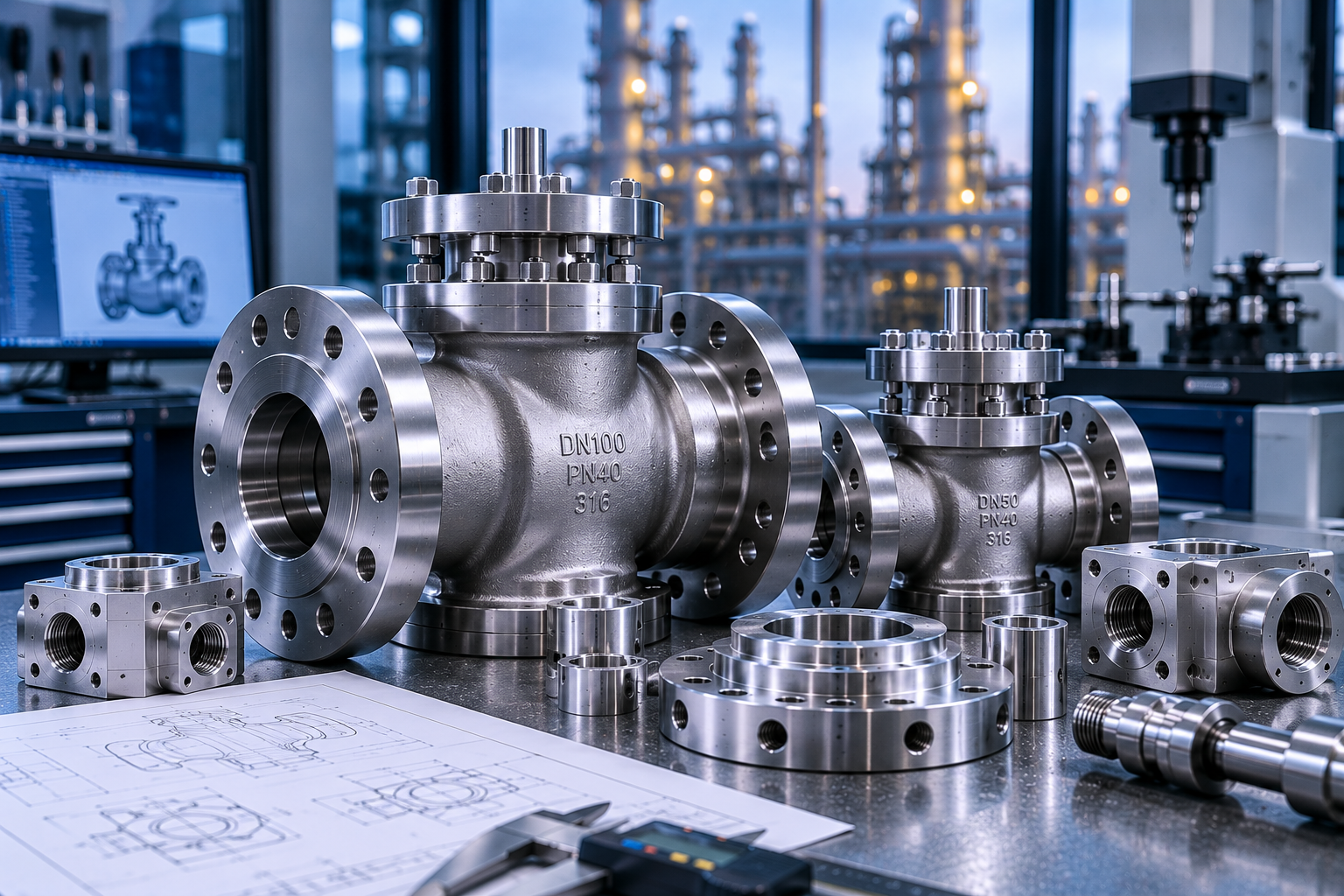
Precision CNC-machined valve bodies and flow-control components for oil gas and energy equipment
Flow-Control Equipment

Valve Bodies & Components

Machined valve-related bodies, covers and interface components with bores, mounting faces, ports and drawing-defined connection features.
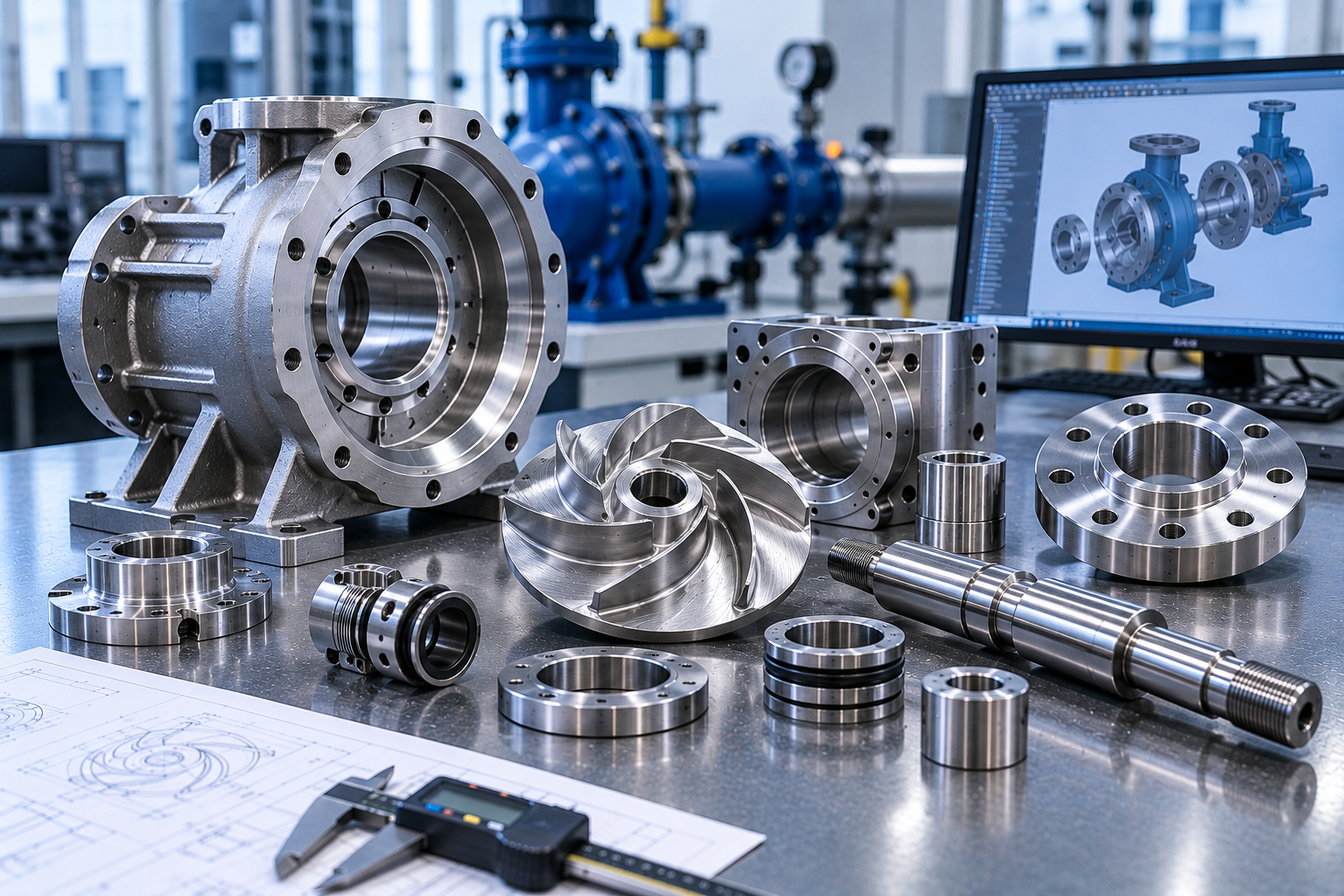
Precision CNC-machined pump components for oil gas and energy equipment
Rotating Equipment

Pump Components

Housings, covers, supports and related components defined around equipment requirements.

Precision CNC-machined manifolds and hydraulic blocks for oil gas and industrial energy systems
Fluid Interfaces

Manifolds & Hydraulic Blocks

Machined blocks with ports, threaded interfaces and project-defined flow features.
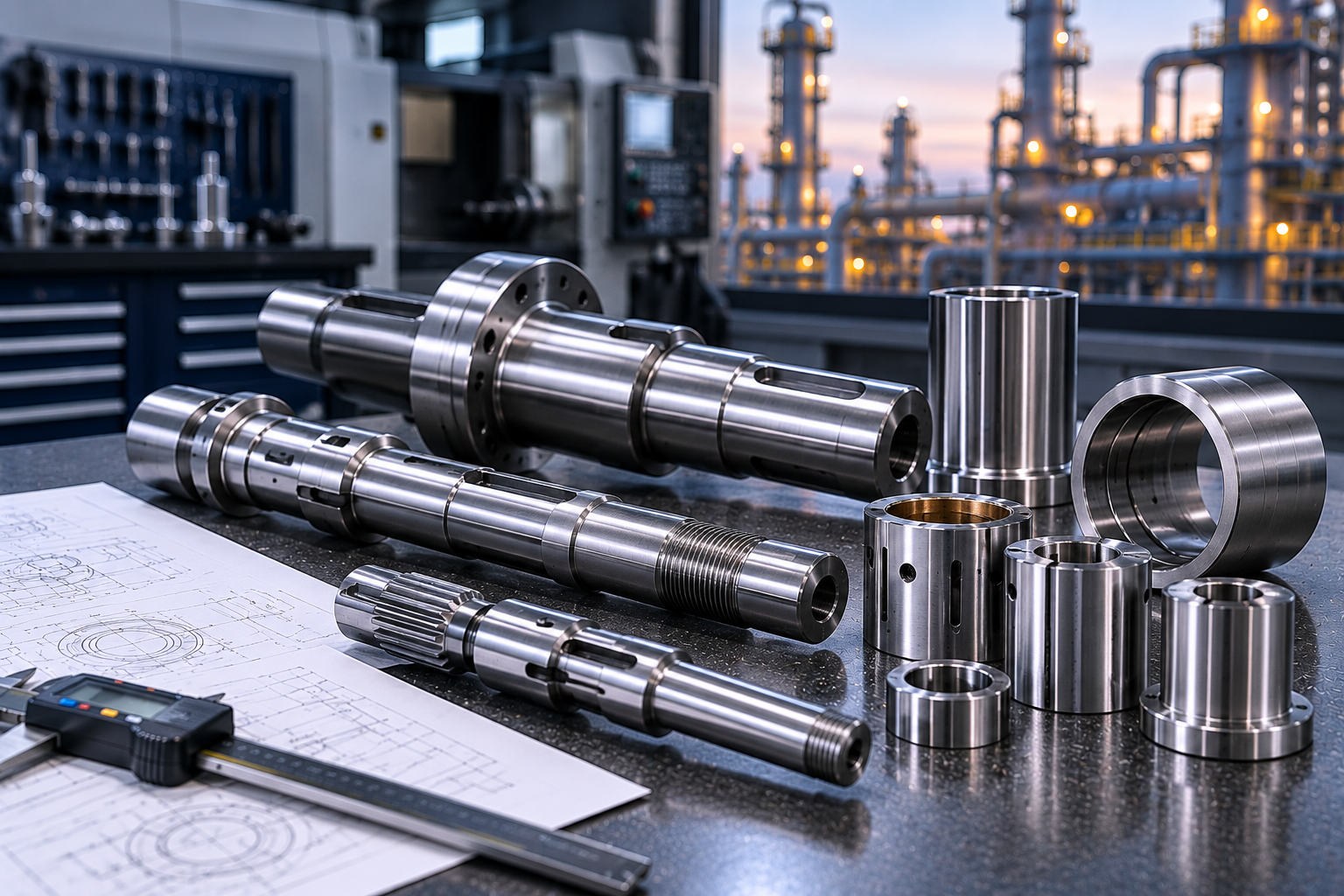
Precision CNC-machined shafts and sleeves for oil gas pumps valves and rotating equipment
Motion & Support

Shafts & Sleeves

Turned diameters, shoulders, threads, bearing interfaces and related shaft features.
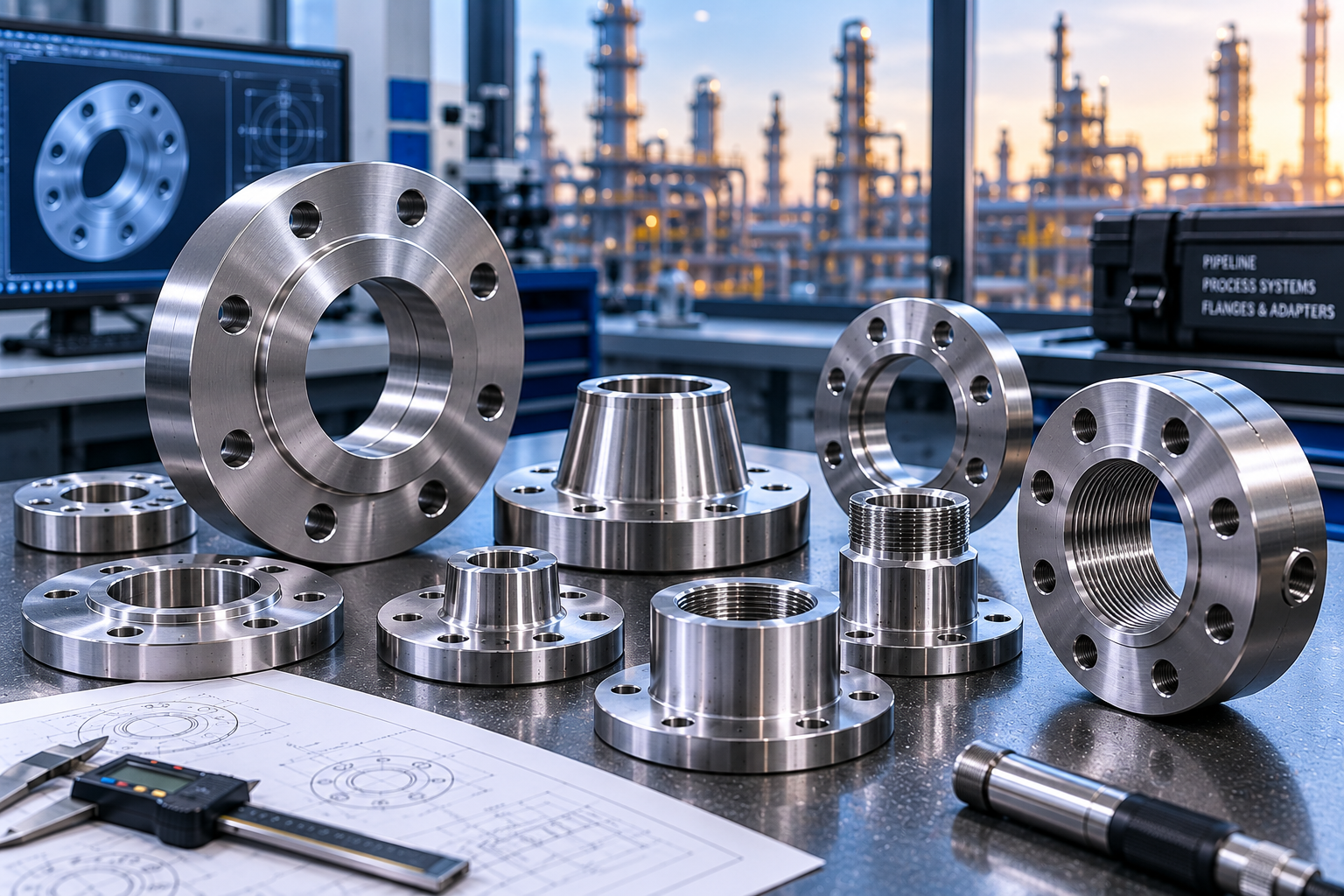
Precision CNC-machined flanges adapters and equipment interface components for oil gas projects
Equipment Connections

Flanges & Adapters

Circular and custom interface components with bores, faces and mounting patterns.

Precision CNC-machined instrumentation hardware fittings adapters blocks and mounting components for oil gas equipment
Instrumentation & Equipment Interfaces

Precision Instrumentation Hardware

Adapters, mounting blocks, threaded components, sensor interfaces and other custom machined hardware can be reviewed against supplied drawings, materials and project requirements.
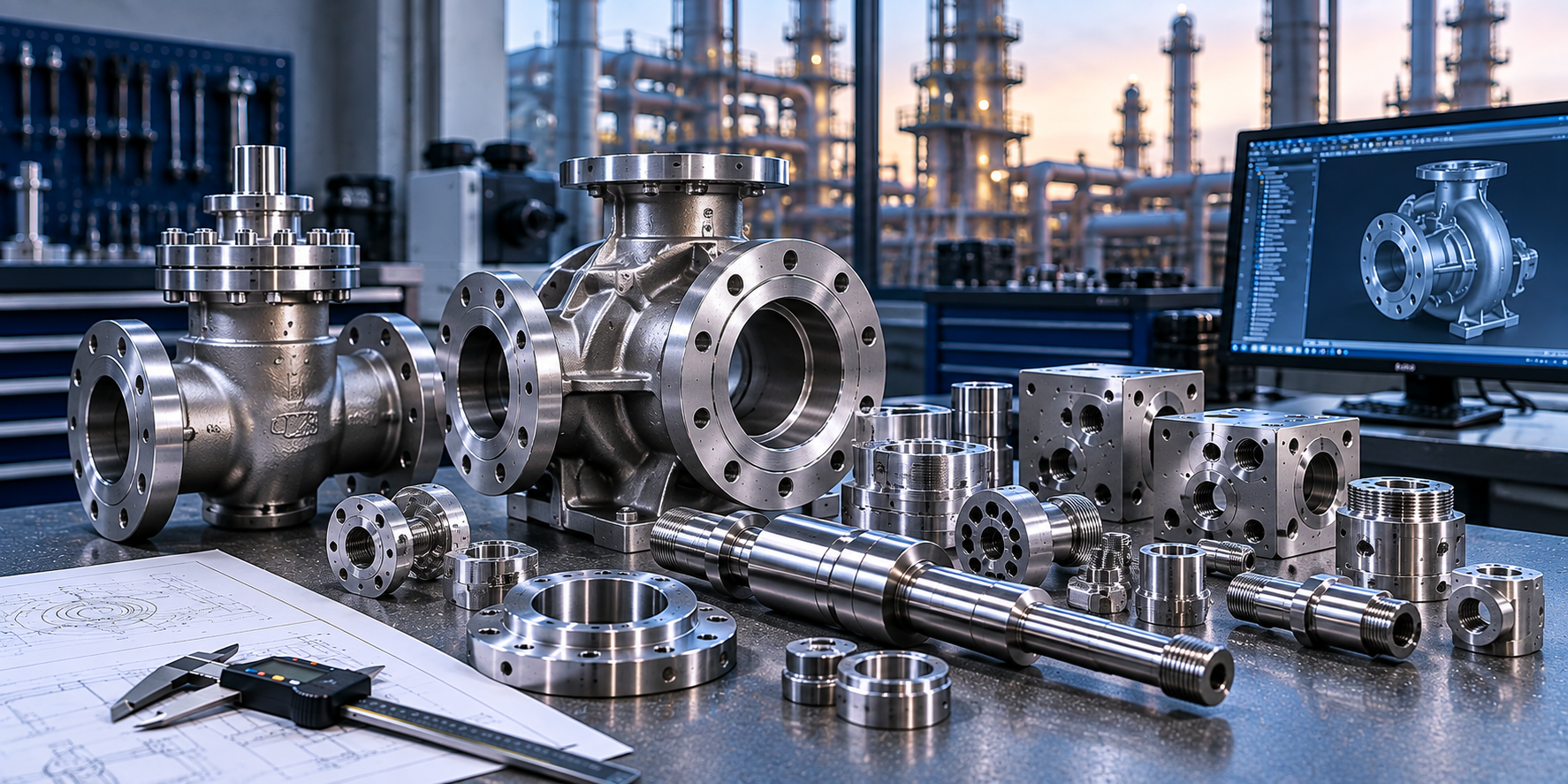
Component Examples Are Indicative. Final manufacturing scope follows the supplied drawing, material specification, quantity and defined service requirements.
Geometry Ports & Interfaces
Function Flow & Motion
Project Drawing Defined

Materials, Service Conditions & Functional Geometry

Define the Component Around Its Actual Equipment Duty.

Oil, gas and energy equipment components can operate under very different mechanical, environmental and fluid-service conditions. Material, geometry, surface and inspection requirements should therefore follow the customer's approved technical specification.

01 · Material

Specified Material Grade

Carbon steels, alloy steels, stainless steels and other engineering materials should follow the project specification.

02 · Service

Operating Environment

Fluid exposure, temperature, corrosion conditions and equipment duty should be defined by the customer.

03 · Geometry

Functional Interfaces

Bores, sealing faces, ports, threads and mounting features can influence machining and inspection strategy.

04 · Surface

Finish Requirements

Surface finish, edge condition and any treatment requirements should be identified on the drawing or RFQ.

Functional Geometry

Sealing, Motion and Connection Features Drive Machining Strategy.

Oil and gas equipment components can combine sealing faces, precision bores, rotating interfaces, threaded ports and mounting datums within the same part. These features should be assessed against the complete drawing requirement.

Sealing Faces & Mating Surfaces
Motion Shafts, Bores & Fits
Flow Ports & Internal Features
Connection Threads & Mounting Interfaces
Service Conditions Must Come From the Project Specification. Manufacturing assumptions should not replace application-specific engineering requirements.
Environment Corrosion Conditions
Media Fluid Compatibility
Duty Defined Equipment Service
Industry-Specific Requirements Should Be Explicitly Defined.

Where a component requires a particular material standard, sour-service requirement, pressure-service requirement, corrosion requirement, inspection level, certification or other industry-specific control, that requirement should be stated within the customer's drawing, specification and RFQ.

Precision machined pump valve and flow-control components for oil gas and energy equipment Pumps · Valves · Flow-Control Equipment

Pump, Valve & Flow-Control Components

Machine the Component Around Its Functional Interfaces.

Pump and valve assemblies can combine rotating features, sealing faces, fluid ports, threaded connections and mounting interfaces. Each component should therefore follow the approved drawing, material specification and defined equipment requirement.

Flow Ports & Internal Features
Sealing Faces & Mating Interfaces
Motion Shafts, Sleeves & Bores
Connection Threads, Flanges & Mounts
Service Conditions Must Be Defined

Material grade, pressure-related requirements, corrosion considerations, sealing surfaces and industry-specific specifications should be provided within the customer's technical documentation where applicable.

Maintenance, Replacement & Legacy Components

Support Existing Equipment When Components Need Replacing.

Maintenance and refurbishment projects can involve worn, unavailable or legacy components from pumps, valves and other energy equipment. Manufacturing feasibility depends on the quality of the available engineering information.

Starting Information

Work From the Best Available Technical Reference.

Existing drawings, CAD models, specifications and physical samples can support an engineering review. Critical material, dimensional and service requirements still need to be established before manufacturing scope is confirmed.

Preferred Manufacturing Drawing
Digital CAD / 3D Model
Legacy Equipment Documentation
Reference Existing Component
01 · Geometry

Functional Dimensions

Bores, sealing faces, threads, shoulders and connection features need adequate definition.

02 · Material

Required Material Grade

Material should be established from approved drawings, specifications or reliable project data.

03 · Service

Operating Requirement

Pressure, medium, temperature, corrosion or other relevant service conditions should be identified.

04 · Interfaces

Equipment Fit

Adjacent parts, mating features, bearings, seals and connection points should be understood.

A Sample Alone May Not Define the Full Service Requirement. Dimensional capture cannot automatically establish original material properties, service rating or industry qualification.
Confirm Geometry
Establish Material
Define Service Scope
Pressure-Containing or Safety-Critical Components Require Clear Technical Definition.

Where a component forms part of a pressure system, sour-service environment or other controlled application, applicable material, testing, documentation, qualification and industry requirements should be supplied by the customer before the manufacturing requirement is reviewed.

Inspection, Documentation & Repeat Supply

Control the Component Against the Approved Technical Requirement.

Oil, gas and energy equipment components can require dimensional verification, material documentation, surface treatment records and controlled revision information. Required documentation should be defined with the RFQ before manufacturing scope is agreed.

01 · Define

Drawing & Project Requirements

Material, tolerances, critical features and required documentation should be established before production.

02 · Inspect

Dimensional Verification

Critical bores, sealing faces, threads, diameters and interfaces can be checked against drawing requirements.

03 · Document

Project-Defined Records

Inspection reports, material records and treatment documentation can be included where agreed for the project.

04 · Repeat

Controlled Repeat Supply

Repeat component requirements can follow the latest approved drawing revision and agreed manufacturing scope.

Documentation Requirements Should Be Defined at RFQ Stage. Inspection and records should follow the agreed component specification and customer project requirements.
Verify Critical Features
Record Required Documents
Control Latest Revision
Industry-Specific Documentation Is Not Automatically Assumed.

Material certificates, CMM reports, coating or treatment records, traceability requirements, PMI, NDT, pressure-related documentation or compliance to specific oil and gas standards should be explicitly identified by the customer where required.

Oil, Gas & Energy Equipment RFQ

Need Precision Components for Oil & Gas Projects in Dubai or the UAE?

Send your drawing, CAD model, material, quantity and project requirements. Gulf Precision Works can review CNC-machined component requirements for pumps, valves, flow-control systems, instrumentation and other energy equipment projects serving customers in Dubai, across the UAE and throughout the wider GCC.

Valve Components Pump Components Manifolds & Blocks Shafts & Sleeves Instrumentation Hardware
Pressure-service, sour-service, material certification, inspection, traceability, testing and industry-standard requirements should be clearly identified by the customer within the RFQ and project documentation.