Aerospace & Aviation CNC Machining
Aerospace CNC Machining for Dubai & UAE Engineering Projects.
Precision-Machined Components for Complex Aerospace and Aviation-Related Applications.
Gulf Precision Works supports aerospace and aviation-related CNC component requirements involving complex geometry, lightweight materials and drawing-defined precision for customers in Dubai, across the UAE and throughout the wider GCC.
Aerospace Engineering Requirements
Precision Starts With Clear Technical Requirements.
Aerospace and aviation-related components can involve complex geometry, lightweight materials and tightly controlled features. The manufacturing scope should therefore follow the approved drawing and project specification.
Complex Features
Multi-surface geometry, pockets, bores and difficult machining access.
Lightweight Materials
Aluminium and other project-specified materials reviewed around component requirements.
Critical Dimensions
Fits, datums and drawing-defined dimensions require appropriate manufacturing control.
Verification Requirements
Inspection scope should follow the drawing and agreed project requirements.
Project Records
Required reports or supporting documents should be defined at RFQ stage.
Typical Component Applications
Precision-Machined Parts for Aerospace & Aviation Projects.
Aerospace-related CNC projects can include structural, mechanical and equipment components with geometry and inspection requirements defined by the approved drawing.
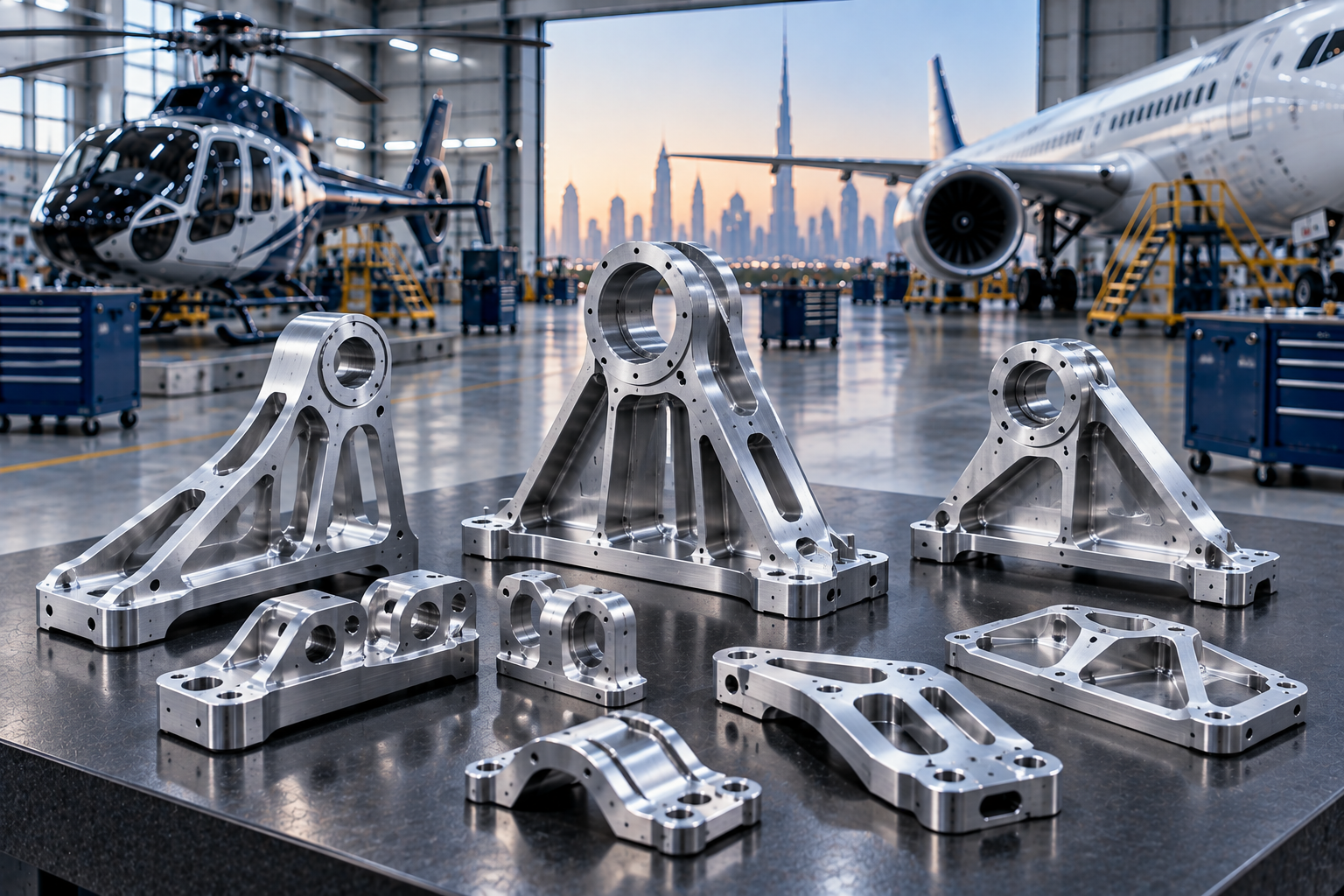
Brackets & Mounts
Lightweight machined support and mounting components.

Housings & Enclosures
Machined bodies with pockets, bores and interfaces.
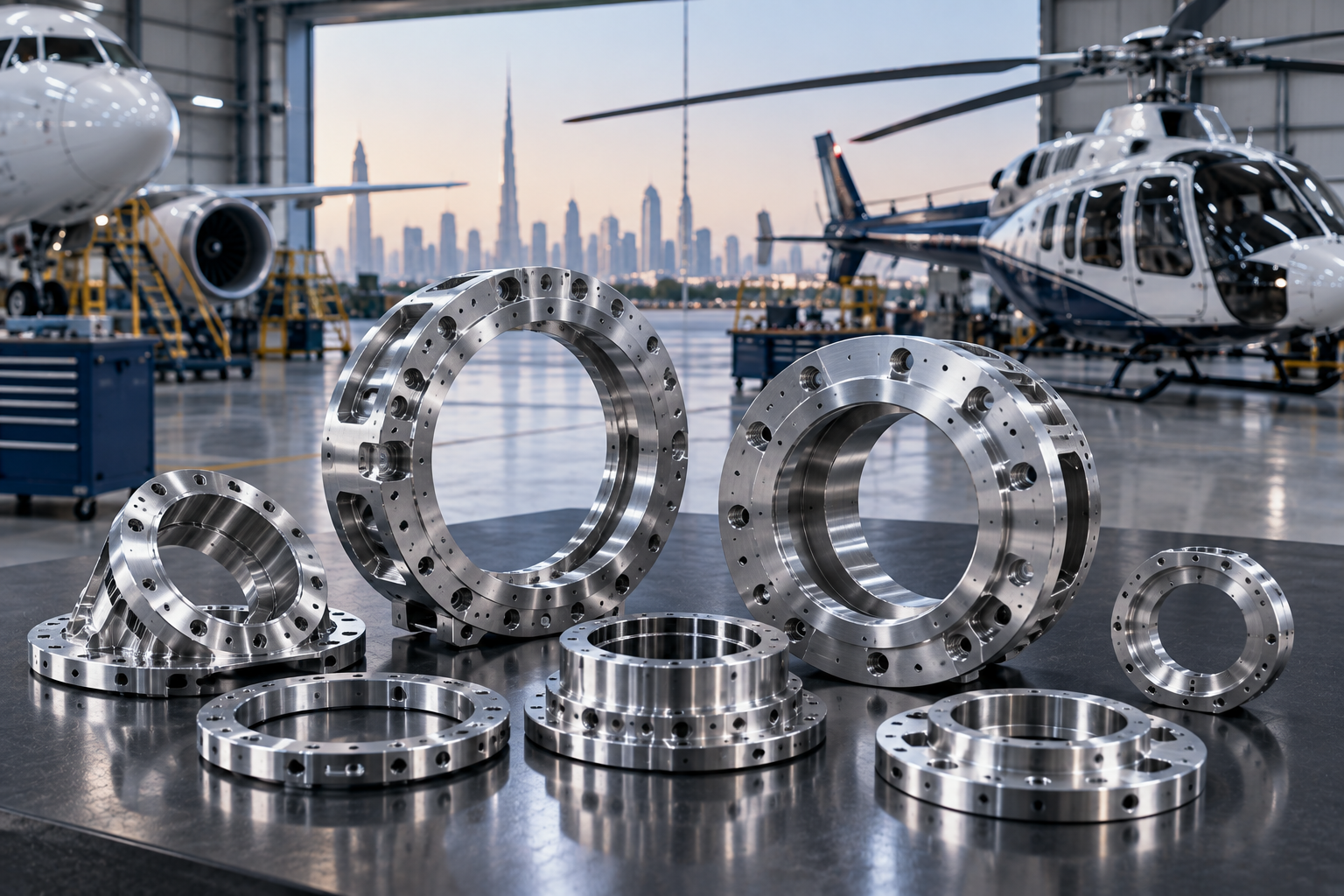
Flanges & Rings
Circular components with defined bores and interfaces.
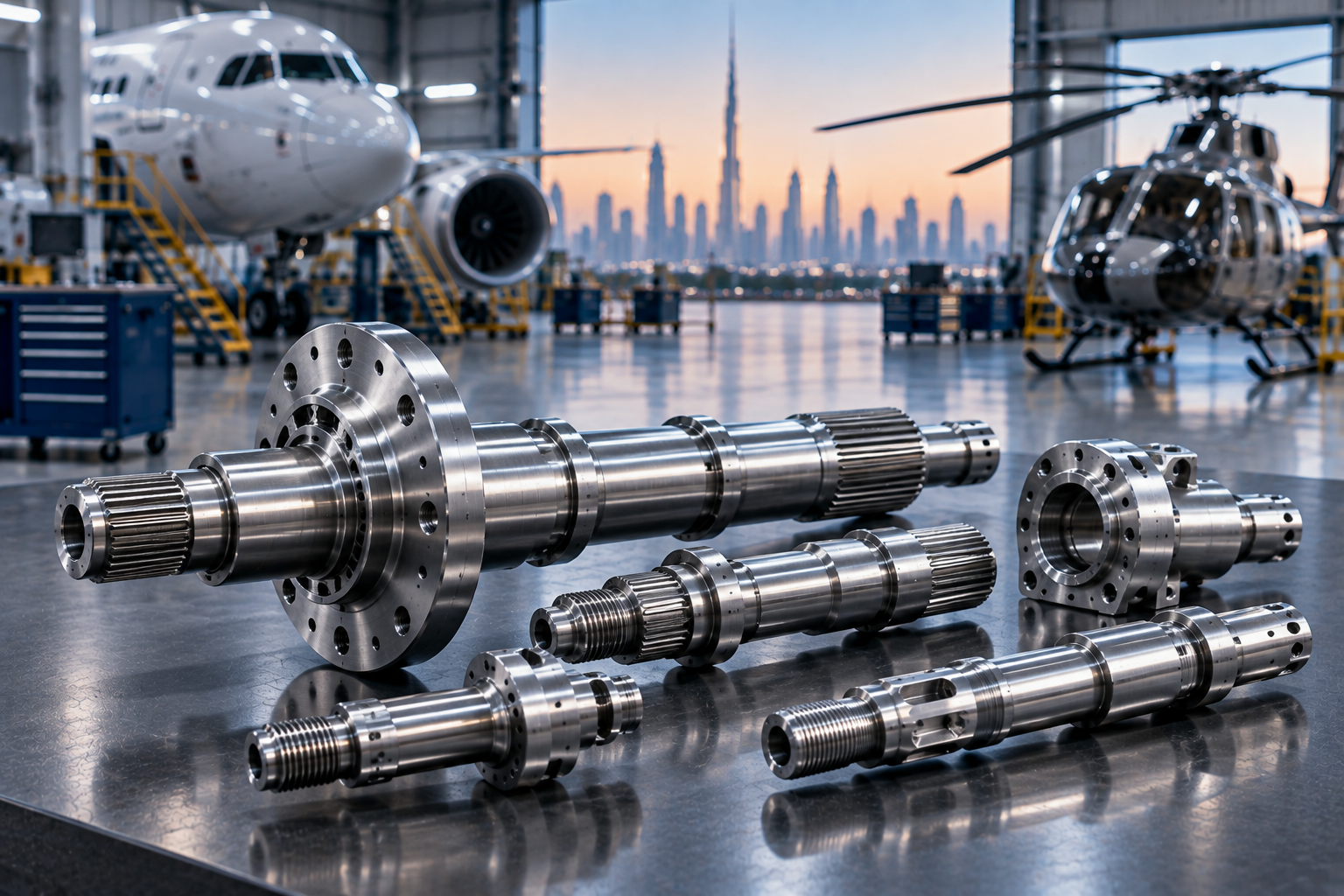
Shafts & Cylindrical Components
Turned features, shoulders, threads and precision diameters.
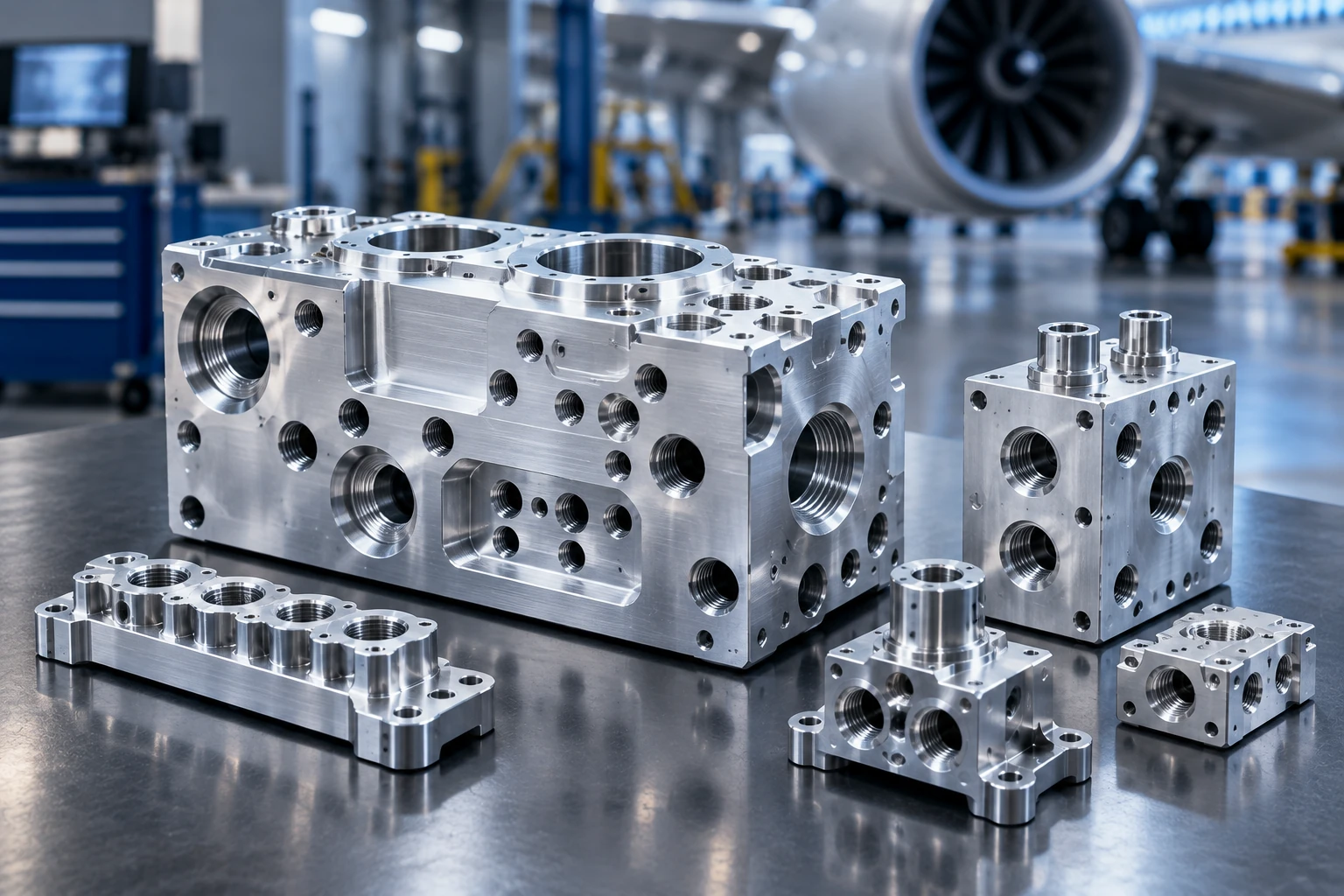
Manifolds & Precision Blocks
Multi-face components with holes, ports and internal features.
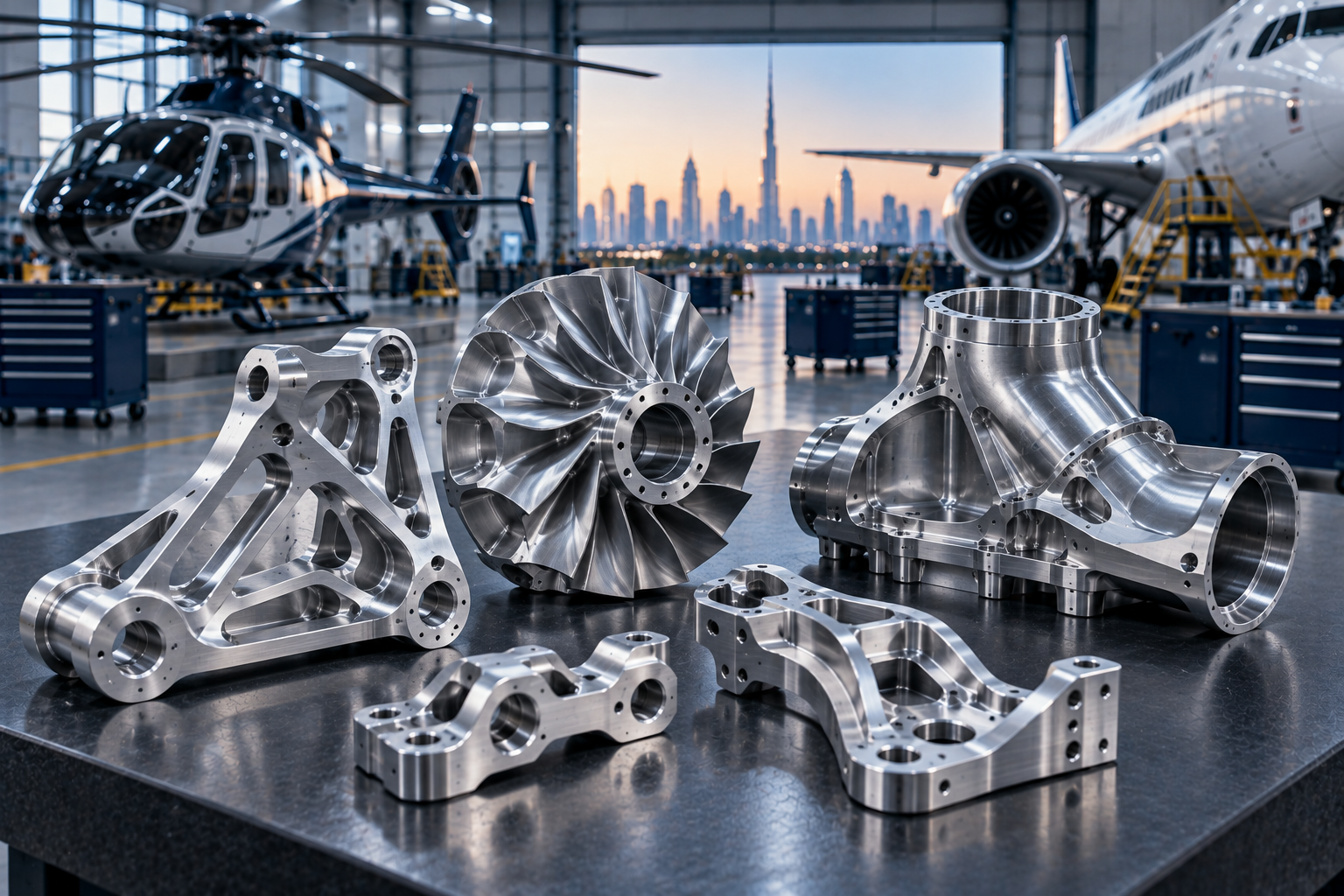
Multi-Surface & 5-Axis Parts
Complex geometries requiring coordinated multi-surface machining.
Component examples are indicative. Final manufacturability, material, tolerance and inspection requirements are reviewed against the supplied drawing and project specification.
Materials & Machining Strategy
Match the Material to the Component & Manufacturing Requirement.
Material selection affects machining strategy, component geometry, finishing and inspection. Aerospace-related projects should therefore follow the material grade defined by the approved drawing or specification.
Aluminium Alloys
Commonly considered where low weight and machinability are important to the component design.
Stainless Steel
Used where the project calls for stainless material and its associated engineering characteristics.
Engineering Steels
Carbon and alloy steels can be reviewed where specified for mechanical component applications.
Project-Specific Materials
Other materials can be assessed against the exact grade, geometry and manufacturing requirement.
Material Alone Does Not Define the Process.
Tool access, wall sections, pockets, datum structure, workholding and final surface requirements all influence how an aerospace-related component should be machined.
Complex Multi-Surface Machining
Complex Geometry & 5-Axis Machining
Machine Complex Features With Fewer Setup Constraints.
Aerospace-related components can combine angled features, deep pockets, contoured surfaces and multiple machining directions. 5-axis machining can support these geometries where the component and manufacturing strategy require coordinated multi-surface access.
Not every aerospace-related component requires 5-axis machining. The appropriate machining strategy should be selected after reviewing the drawing, access requirements and critical features.
Inspection, Traceability & Documentation
Quality Requirements Should Be Defined From the Start.
Aerospace-related CNC projects can require controlled inspection and supporting documentation. The exact scope should be agreed from the drawing, RFQ and project requirements.
Drawing-Defined Checks
Critical dimensions and features are reviewed against the approved drawing and inspection requirement.
CMM Support
CMM inspection can support verification where the component geometry or project scope requires it.
Material Identification
Material grade and related records should be specified where traceability forms part of the project scope.
Required Documentation
Inspection reports, certificates or supporting records should be requested at RFQ stage where applicable.
Documentation is not assumed for every order. Where material certificates, inspection reports, traceability records or other project-specific documents are required, include them with the RFQ so availability and scope can be reviewed before production.
Prototype to Repeat Production
Support the Component From First Part to Repeat Requirement.
Aerospace and aviation-related CNC projects can begin with prototype quantities and progress into repeat requirements. The manufacturing approach should remain aligned with the approved drawing and project scope.
Drawing & DFM Review
Confirm geometry, material, critical features and manufacturing requirements.
Initial Component Production
Produce the required quantity against the agreed manufacturing scope.
Inspection & Review
Verify drawing-defined features and any required project documentation.
Repeat Production
Continue manufacturing against the approved requirements where repeat quantities are needed.
Aerospace & Aviation RFQ
Need Precision Aerospace Components for Dubai or UAE Projects?
Send your drawing, material, quantity and project requirements. Gulf Precision Works can review the CNC manufacturing scope for aerospace and aviation-related component requirements across Dubai, the UAE and wider GCC.